
Understanding the Difference Between Temporary Site Hoarding and Permanent Fencing
Construction projects across Melbourne require effective site security, access management and boundary protection to keep workers, visitors and members of the public safe. Two common solutions developers consider are temporary site hoarding and permanent fencing, both of which serve important purposes during different stages of a project. Although these systems may appear similar at first, their intended uses, installation requirements, durability and long-term value can differ significantly. Temporary site hoarding is generally installed around active construction sites to restrict unauthorised access, conceal work areas and protect pedestrians from potential hazards. Permanent fencing, by comparison, is designed to provide a lasting boundary around completed developments, commercial properties, residential buildings and other facilities. At NGE Group, we understand that selecting the right boundary solution requires developers to consider the entire project lifecycle rather than focusing solely on the initial installation cost.
What Is Temporary Site Hoarding?
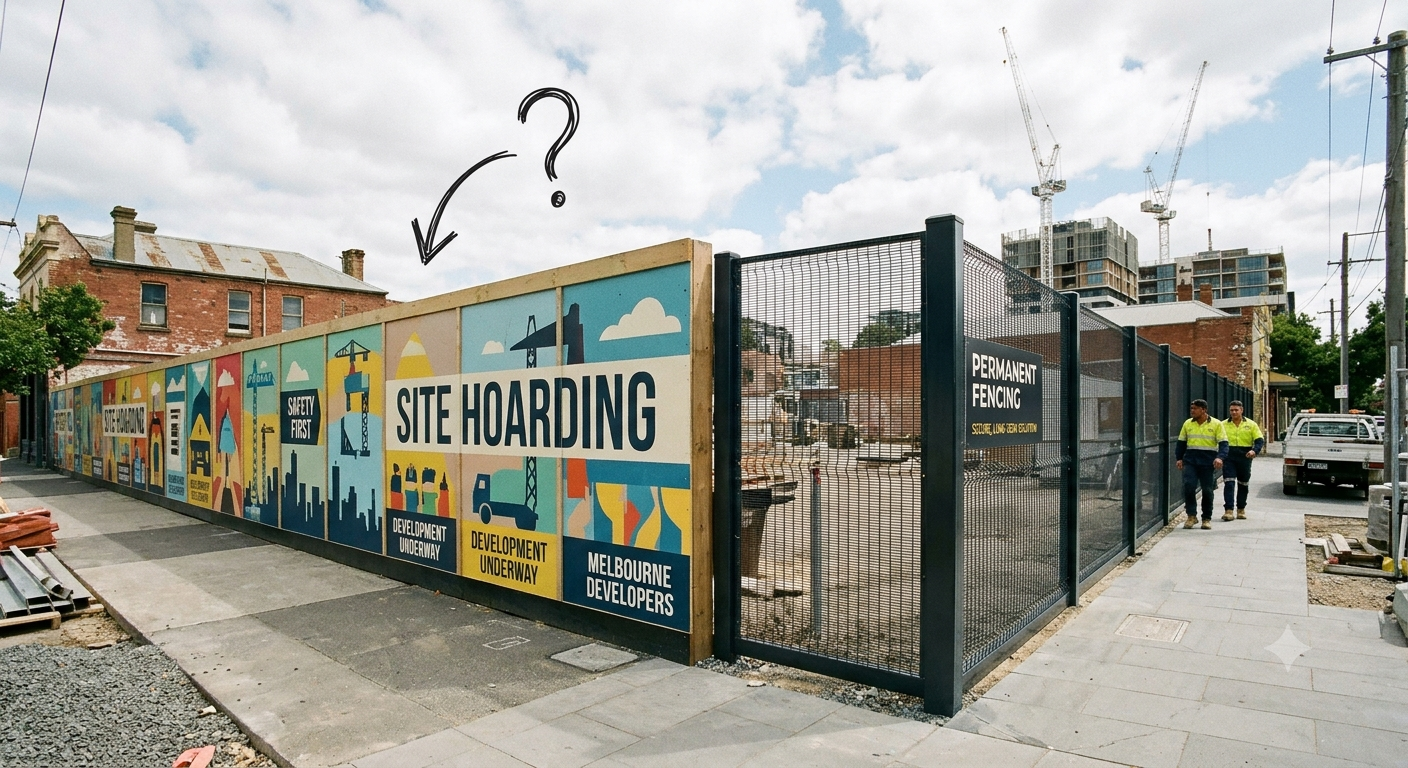
Temporary site hoarding is a protective barrier installed around construction sites, demolition projects, redevelopment areas and other locations where building work creates potential safety risks. It commonly consists of solid panels, suitable support structures and secure access points designed to separate the work zone from surrounding public areas. Unlike open fencing, solid hoarding can help conceal construction activities, stored materials and equipment from pedestrians and neighbouring properties. This additional screening can be particularly valuable for developments located along busy Melbourne streets, near retail precincts or within established residential neighbourhoods. Temporary hoarding can also support site branding, project information displays and visual communication when appropriate permissions and design requirements are satisfied. Its primary purpose is to provide practical protection throughout construction, with the flexibility to be modified, relocated or removed when the project reaches the relevant stage.
What Is Permanent Fencing?
Permanent fencing is a long-term boundary solution designed to secure a property after construction or redevelopment has been completed. Depending on the property's intended use, it may include steel fencing, aluminium systems, security mesh, tubular fencing or other durable materials suited to the environment. These installations can help define property boundaries, control access, protect outdoor areas and complement the architectural appearance of a finished development. Residential apartment complexes, commercial buildings, industrial facilities and mixed-use properties may all require permanent fencing as part of their overall security arrangements. Material selection, gate placement, maintenance requirements and compatibility with the surrounding landscape can influence how well the system performs over time. We recommend considering permanent fencing as part of the broader property design so that security, accessibility and appearance work together rather than being treated as separate requirements.
Why Melbourne Developers Need to Choose Carefully
Melbourne's construction environment includes high-density residential developments, commercial refurbishments, infrastructure projects and new housing estates, each presenting different site management challenges. A development in the central business district may require careful pedestrian management, restricted access and clear separation between construction operations and public footpaths. A suburban residential project may place greater emphasis on protecting neighbouring properties, controlling vehicle movements and maintaining safe access around the site. Industrial developments may require more robust security arrangements to protect valuable equipment, materials and operational areas. These differences mean that one boundary solution will not necessarily suit every project or construction phase. By evaluating the location, project duration, surrounding environment and intended end use, developers can make informed decisions that support safety, compliance and cost control throughout the development process.
Construction Safety and Public Protection
Safety is one of the most important considerations when selecting temporary hoarding or permanent fencing for a Melbourne development. Active construction sites can contain excavation areas, moving machinery, falling-object hazards, building materials and other risks that must be appropriately controlled. Temporary site hoarding can create a solid physical separation between these activities and members of the public, helping reduce opportunities for unauthorised entry. Its effectiveness depends on correct design, stable installation, suitable access arrangements and ongoing inspection throughout the construction period. Permanent fencing can provide ongoing security once a property becomes operational, but its design must suit the specific risks associated with the finished premises. We encourage developers to assess both immediate construction hazards and future property security needs before deciding which system should be installed at each stage.
Victorian Regulations and Council Requirements
Developers must consider applicable Victorian legislation, local council requirements, planning conditions and construction safety obligations when installing site barriers or permanent fencing. Requirements can vary depending on the location, the nature of the work, the position of the barrier and whether public land or footpaths are affected. Temporary hoarding installed near a public road or pedestrian area may require specific approvals, traffic management arrangements or permits before installation can proceed. Developers should also assess requirements relating to structural stability, pedestrian accessibility, emergency access and the safe management of construction activities. Permanent fencing may be subject to planning controls, building requirements, boundary considerations, easements or restrictions associated with the property's intended use. NGE Group encourages project teams to confirm the relevant requirements with the appropriate authorities and qualified professionals before committing to a design or installation schedule.
Installation Time and Project Scheduling
Installation time can influence the suitability of temporary hoarding and permanent fencing, particularly when construction schedules are tight. Temporary hoarding is often arranged during site establishment because secure boundaries may be required before demolition, excavation or major building work begins. The installation process must account for site access, ground conditions, panel dimensions, support requirements and any necessary pedestrian protection measures. Permanent fencing may be installed later in the project when finished ground levels, landscaping, driveways and external building works are sufficiently advanced. Installing permanent fencing too early can expose finished components to damage from heavy machinery, material deliveries and ongoing construction activity. We recommend coordinating boundary installation with the overall construction programme so that each system is installed when it can provide the greatest practical benefit without disrupting other trades.
Comparing Initial Costs and Long-Term Value
The financial comparison between temporary site hoarding and permanent fencing should include more than the initial supply and installation price. Temporary hoarding may involve installation, rental or ownership costs, maintenance, modifications, removal and transport, depending on the arrangement selected. Permanent fencing generally requires an upfront investment in materials, installation and associated gate or access-control components, but it can remain in service for many years when properly selected and maintained. Developers should also account for the potential costs of repairing damaged barriers, managing unauthorised access and addressing delays caused by unsuitable boundary arrangements. A lower initial price does not necessarily represent the best overall value if the system requires frequent repairs or cannot meet the site's security and safety needs. At NGE Group, we encourage developers to compare the total expected cost over the relevant project period and assess how each option contributes to safe, efficient construction and long-term property performance.
Durability and Melbourne's Weather Conditions
Melbourne's weather can place considerable demands on construction barriers and permanent fencing, particularly when sites experience strong winds, heavy rain, temperature fluctuations and prolonged exposure to sunlight. Temporary hoarding must be adequately supported and maintained to remain stable under the conditions expected at the installation location. Solid panels can be vulnerable to wind loading, so their design, bracing, anchoring and installation must be suitable for the specific site and exposure conditions. Permanent fencing also requires careful material selection to manage corrosion, moisture exposure, physical impacts and general environmental wear. Coated metals, suitable fixings and appropriate finishes can help improve durability, although performance depends on the quality of the materials and installation. Regular inspections and timely maintenance are essential for both systems, particularly after severe weather or when construction activities may have affected their stability.
Security and Access Control
Security requirements can change substantially between the construction stage and the operational life of a completed development. Temporary site hoarding helps establish a controlled perimeter around active work areas, limiting casual access and making site entry points easier to manage. Secure gates, suitable locking arrangements and clearly defined access routes can support the movement of authorised workers, contractors and deliveries. However, the overall security outcome also depends on site supervision, lighting, access procedures and the protection of stored equipment and materials. Permanent fencing can provide a more enduring security framework for apartment buildings, commercial premises, industrial sites and other properties that require controlled entry after completion. Developers should consider whether additional features, such as automated gates, access-control systems or security monitoring, are appropriate for the property's ongoing operational requirements.
Visual Appearance and Neighbouring Properties
The visual impact of construction barriers can influence how a development is perceived by neighbours, pedestrians, customers and prospective buyers. Temporary hoarding can conceal unfinished areas and present a more organised appearance around a construction site, especially when its panels are kept clean and maintained. Where permitted, project signage and carefully designed graphics can communicate development information while improving the appearance of the site boundary. Permanent fencing has a different role because it becomes part of the completed property's visible streetscape and overall architectural presentation. Its height, colour, material and style should complement the building design while respecting applicable planning controls and neighbourhood character considerations. We advise developers to treat temporary and permanent boundary treatments as separate design decisions that should still contribute to a consistent and professional project identity.
Pedestrian Management and Restricted Site Access
Pedestrian movement is a particularly important consideration for construction projects located near footpaths, transport routes, schools, shops and busy intersections. Temporary site hoarding can help establish a clear boundary between construction operations and public movement, but the arrangement must not compromise required pedestrian access or create additional hazards. Where work affects a footpath or road reserve, developers may need an approved traffic or pedestrian management plan and suitable arrangements for people with disability. Entry gates should be positioned to support safe deliveries and worker movements without creating unnecessary conflicts with pedestrians or passing vehicles. Permanent fencing must also be planned carefully to avoid obstructing public access, visibility at vehicle crossings or the safe use of adjoining spaces. Effective coordination between site managers, designers and relevant authorities helps ensure that boundary systems support safe movement throughout construction and after the property becomes operational.
Flexibility as the Development Progresses
One of the main advantages of temporary site hoarding is its ability to accommodate changing construction requirements. As excavation, structural work, external finishing and landscaping progress, the site layout may need to change to allow access for equipment, deliveries and different trades. A well-planned temporary barrier arrangement can be adjusted to suit these changes, provided modifications are undertaken safely and comply with applicable requirements. Permanent fencing offers less flexibility because it is intended to remain in place, making the timing of installation particularly important. Installing permanent boundaries after heavy construction traffic has reduced can help protect finished surfaces and avoid unnecessary rework. Developers should therefore map out temporary and permanent boundary requirements at the beginning of the project, allowing for planned transitions instead of treating each installation as an isolated task.
Maintenance and Inspection Requirements
Both temporary hoarding and permanent fencing require appropriate inspection and maintenance to remain effective. Construction activity can cause panels to shift, fixings to loosen, gates to become damaged and supports to be disturbed by vehicles or equipment. Severe weather can introduce additional risks, especially where solid barriers are exposed to strong winds or where ground conditions affect stability. Site managers should arrange inspections at suitable intervals and after relevant incidents or adverse weather events, with defects addressed promptly. Permanent fencing also benefits from routine checks for corrosion, damaged sections, worn hinges, faulty locks and deterioration around posts or foundations. A consistent maintenance approach helps preserve the barrier's performance, reduce avoidable repair costs and ensure that emerging problems are identified before they create a greater safety or security concern.
Environmental and Site-Specific Considerations
Environmental conditions and surrounding land uses can influence the selection and placement of construction barriers. Sites near waterways, sensitive vegetation, heritage buildings or established residential areas may require additional consideration during planning and installation. Developers should assess whether the proposed barrier system could interfere with drainage, damage existing trees, restrict required access or affect neighbouring properties. The reuse or relocation of temporary hoarding components may also help reduce unnecessary material waste when suitable systems are available and remain fit for purpose. Permanent fencing should be selected with consideration for expected service life, maintenance demands and the potential for components to be repaired or replaced individually. By assessing environmental and site-specific factors early, project teams can choose boundary solutions that support construction requirements without creating avoidable impacts elsewhere.
Can Developers Use Both Systems on the Same Project?
Temporary site hoarding and permanent fencing are not necessarily competing alternatives because they often serve different purposes during the same development. A construction site may require solid temporary hoarding around active work zones while permanent fencing is installed progressively along completed sections of the property. For example, a residential apartment project may use hoarding to protect the public during excavation and building works before installing permanent fencing around landscaped communal areas and access points. A commercial redevelopment may retain temporary barriers around loading areas while permanent security fencing is completed along operational boundaries. The transition between the two systems must be coordinated to avoid leaving gaps in site security or exposing the public to construction hazards. We recommend planning this transition as part of the construction programme so that temporary protection remains effective until the permanent system is ready for use.
How to Choose the Right Solution for Your Melbourne Development
The right boundary solution depends on the development's stage, risk profile, location, budget and long-term operational needs. Temporary site hoarding is generally appropriate when construction activities require solid screening, controlled access and separation from public areas. Permanent fencing is better suited to establishing a lasting boundary for a completed property or an area that requires ongoing access control. Developers should also consider local approval requirements, installation timing, durability, maintenance responsibilities and the consequences of inadequate site protection. Where construction and operational needs overlap, a combined approach may provide the most practical outcome. At NGE Group, we believe that early planning and a clear understanding of project requirements help developers select boundary solutions that support safety, efficiency and the successful delivery of their developments.
Final Thoughts
Choosing between temporary site hoarding and permanent fencing is an important part of managing a construction project in Melbourne. Temporary hoarding helps protect active work areas, manage public exposure to construction hazards and maintain an organised site boundary, while permanent fencing provides lasting security and defines the completed property's external spaces. The most suitable option depends on the project's construction stage, site conditions, applicable regulations, security requirements and intended future use. Developers who assess these factors early can make better decisions about installation timing, total costs, maintenance and the transition between temporary and permanent systems. A coordinated approach also reduces the likelihood of unnecessary rework, access problems and gaps in site protection. By treating boundary planning as an integral part of project delivery, developers can establish safer construction environments and provide a more secure, functional and professional finished property.
