
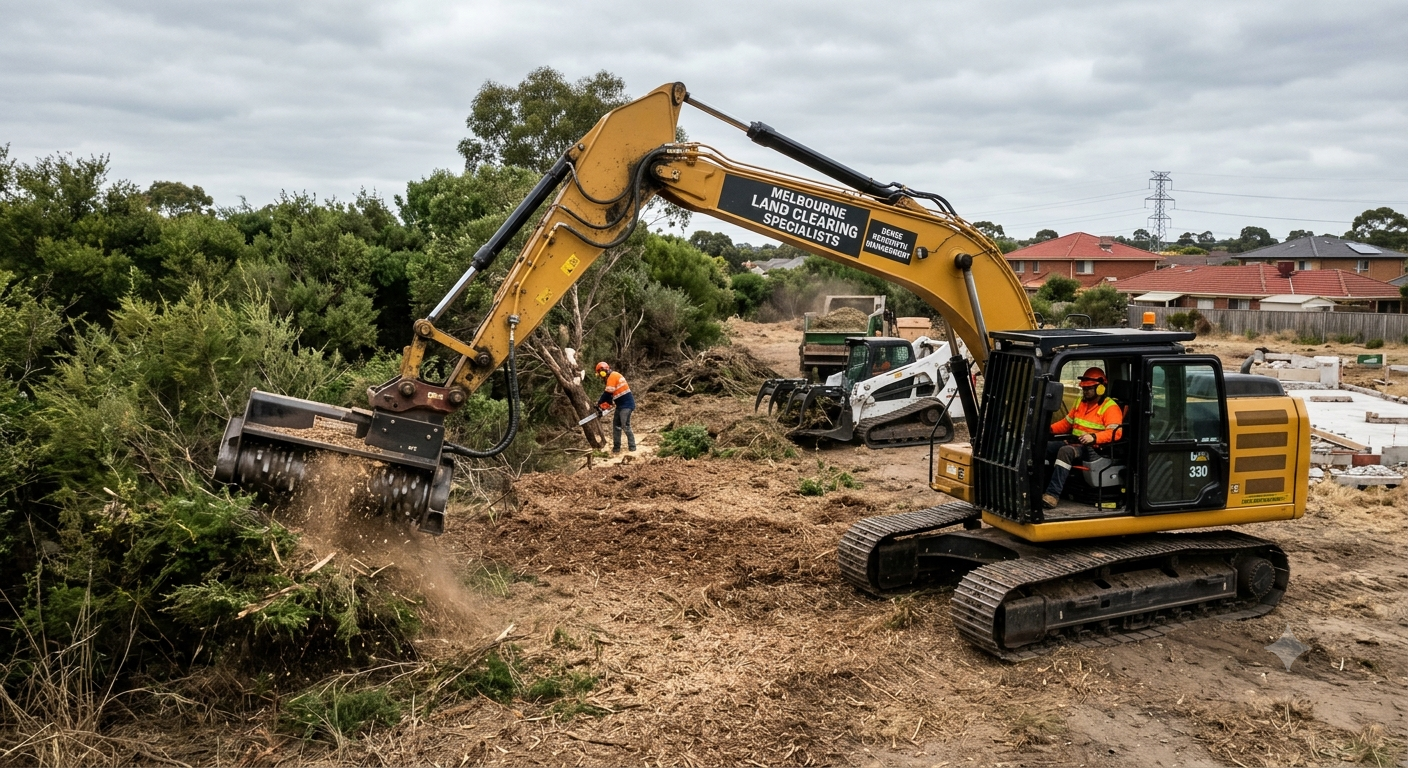
Understanding Dense Regrowth on Previously Developed Properties
Previously developed properties across Melbourne can present unique challenges when vegetation grows back after construction, demolition, subdivision or extended periods of inactivity. Sites that once contained houses, commercial buildings, sheds, access roads or landscaped gardens can quickly become overgrown when regular maintenance stops. Grass, shrubs, climbing plants, saplings and invasive weeds may gradually spread across the property, making it difficult to identify the original layout and assess the condition of the land. In some cases, dense vegetation can conceal old foundations, concrete slabs, drainage structures, discarded materials and uneven ground. These hidden features can complicate clearing operations and create additional risks for workers and machinery. As experienced land clearing contractors, we understand that managing regrowth requires a considered approach that addresses vegetation, ground conditions, site accessibility and the intended future use of the property.
Why Previously Cleared Land Can Develop Heavy Vegetation
Vegetation can return surprisingly quickly to Melbourne properties where the soil has been disturbed or exposed during previous development activities. Removing a building or clearing a block does not necessarily eliminate the roots, seeds and underground plant material capable of producing new growth. Certain weeds and woody plants can spread through root systems, while wind, birds and surrounding vegetation introduce new seeds to vacant land. Melbourne's seasonal rainfall and periods of warmer weather can encourage rapid growth, particularly where moisture and sunlight are readily available. Properties that remain vacant for several months or years may consequently develop thick vegetation that becomes increasingly difficult to manage with basic mowing equipment. At NGE Group, we assess the extent and characteristics of regrowth before determining the most appropriate clearing method for each property.
Conducting an Initial Site Assessment
A thorough site assessment is an essential first step when managing dense regrowth on previously developed land. Contractors need to understand the property's dimensions, access points, vegetation density, ground conditions and any existing structures that could affect the work. The assessment also helps identify potential hazards, including concealed pits, unstable ground, exposed services, buried debris and remnants of earlier construction. Where the original site layout is unclear, available property plans, service information and previous development records may help establish what lies beneath the vegetation. Contractors also consider whether nearby homes, roads, fences, neighbouring vegetation and public access areas could be affected by clearing activities. This initial investigation provides the information needed to develop a practical work plan that balances efficient vegetation removal with site safety and environmental responsibilities.
Identifying the Types of Regrowth Across the Property
Not all vegetation requires the same clearing technique, which is why contractors examine the types of plants present before selecting machinery or planning removal. Light regrowth may consist mainly of grass, small weeds and young shrubs that can be managed using relatively straightforward equipment. More established vegetation may include woody saplings, thick undergrowth, climbing plants and mature shrubs that require specialised cutting or mulching attachments. Invasive species can introduce additional considerations because some plants spread readily when their roots or seeds are disturbed. Certain vegetation may also require careful identification before removal because it could be protected, environmentally significant or subject to local restrictions. By distinguishing between different vegetation types, we can select suitable equipment, reduce unnecessary ground disturbance and avoid treating every part of the property as though it presents the same clearing challenge.
Selecting Suitable Machinery for Dense Regrowth
Machinery selection plays a major role in determining how efficiently dense regrowth can be removed from a previously developed Melbourne property. Contractors may use excavators, skid steer loaders, tracked loaders, mulchers, brush cutters and other equipment depending on vegetation density, terrain and available working space. Mechanical mulching can be particularly useful where shrubs, grass and smaller woody growth need to be reduced into manageable organic material. Excavators fitted with suitable attachments may be more appropriate for removing larger shrubs, saplings and stubborn vegetation that cannot be handled efficiently by lighter equipment. Tracked machinery can also provide practical advantages on some uneven or soft surfaces, although ground pressure and soil conditions must be considered before use. Our approach is to match the equipment to the site rather than rely on a single clearing method for every property.
Managing Thick Undergrowth and Interwoven Vegetation
Dense undergrowth often creates difficulties because different types of vegetation grow together and restrict access to the ground beneath them. Climbing plants may wrap around shrubs and young trees, while tangled branches can conceal obstacles and prevent machinery from moving freely. Contractors typically manage these areas in stages, beginning with an assessment of the safest access route and identifying vegetation that needs to be removed before heavier machinery can operate effectively. Cutting or mulching accessible growth can gradually improve visibility and create room for equipment to reach more heavily overgrown sections. Where thicker woody vegetation remains, contractors may use suitable attachments or controlled cutting techniques to break it down without unnecessarily disturbing retained trees or nearby structures. This staged approach helps maintain better control over the clearing process while reducing the likelihood of machinery becoming obstructed by tangled vegetation.
Protecting Existing Structures and Underground Services
Previously developed properties require particular care because vegetation can conceal infrastructure that remains in place long after construction or demolition has finished. Underground electrical cables, water pipes, telecommunications lines, drainage systems and other services may cross areas that appear to be ordinary overgrown ground. Old concrete footings, retaining walls, fences and paved surfaces can also remain hidden beneath grass and shrubs. Before excavation or root removal begins, contractors need to establish the location of relevant services through appropriate plans, service locating procedures and required approvals. In Victoria, the Before You Dig Australia service can assist with obtaining information about underground infrastructure, although additional site-specific locating and verification may still be necessary. At NGE Group, careful planning around existing infrastructure helps reduce the risk of accidental damage, costly repairs and delays to subsequent development work.
Removing Woody Growth Without Unnecessary Ground Disturbance
Established shrubs and saplings can develop extensive root systems that make removal more complicated than cutting away the visible vegetation. The appropriate technique depends on whether the property requires a simple surface clearance, removal of selected roots or more extensive preparation for construction. Where vegetation is being mulched, the root systems may remain undisturbed, depending on the clearing specification and intended land use. However, future building works, landscaping or excavation may require additional treatment of stumps and roots to meet the project's requirements. Contractors must also consider the possibility of disturbing buried services, existing foundations or unstable ground when deciding whether to extract roots mechanically. By confirming the required finish before work begins, we can avoid unnecessary excavation and ensure that vegetation removal is appropriate for the property's next stage.
Dealing With Hidden Demolition Debris and Old Building Materials
Overgrown sites that have previously contained buildings or structures may hold more than vegetation beneath the surface. Demolition debris, broken concrete, timber, metal, glass and other discarded materials can become concealed by grass, weeds and accumulated organic matter. These materials can damage machinery, create hazards for workers and interfere with the quality of the finished site. Contractors may need to separate accessible debris from vegetation as clearing progresses, while larger or buried materials may require a separate removal process. If asbestos-containing materials, contaminated soil or other hazardous substances are suspected, work may need to stop in the affected area until the material can be assessed and managed by appropriately qualified professionals. Separating vegetation clearing from specialised waste handling helps ensure that the property is prepared responsibly and that hazardous materials are not inadvertently spread across the site.
Managing Invasive Weeds and Preventing Further Spread
Invasive weeds are a common concern on neglected properties because they can spread across cleared areas and reinvade the land after machinery has finished operating. Some species regenerate from root fragments, while others produce large quantities of seeds that can be dispersed by equipment, soil movement or wind. Simply cutting down visible growth may therefore provide only temporary improvement if the underlying cause of regrowth remains untreated. Contractors may need to identify the relevant species and determine whether additional weed control, root treatment or follow-up maintenance is appropriate. Machinery and attachments may also require cleaning when moving between sites or working in areas containing plants that can spread through contaminated soil or plant material. Where weeds are subject to specific control requirements in Victoria, the applicable obligations should be checked before removal begins. An integrated approach that combines clearing with suitable follow-up management can help reduce the likelihood of rapid reinvasion.
Working Around Retained Trees and Sensitive Vegetation
Not every previously developed property needs to be cleared completely, and some projects require particular trees or established vegetation to remain. Mature trees can contribute to the character of a property, provide shade and habitat, and form part of landscaping or planning requirements. However, dense regrowth around retained trees can make it difficult to access the surrounding ground without damaging trunks, roots or low branches. Contractors need to establish which vegetation must remain and plan equipment movements accordingly. Tree protection requirements, including those associated with local planning controls, may influence the clearing methods permitted on the property. By identifying retained vegetation before work starts, we can remove unwanted regrowth while helping protect the existing landscape and maintain compliance with relevant requirements.
Considering Melbourne's Soil and Weather Conditions
Local ground conditions can influence both the choice of machinery and the timing of land clearing operations. Melbourne properties can contain a range of soil types, including clay-heavy soils that become slippery or difficult to work when wet. Extended rainfall can reduce traction, increase the risk of machinery bogging and contribute to soil compaction or rutting. Dry periods may improve access in some locations, although exposed soils can become dusty and require appropriate management. Contractors must also consider slopes, drainage patterns and areas where water naturally collects, especially when vegetation removal could expose previously sheltered ground. Planning around these conditions helps us maintain more consistent progress while limiting avoidable damage to the land and reducing the risk of creating drainage problems during clearing.
Managing Green Waste and Material Removal
Once dense vegetation has been cut, mulched or removed, contractors must determine how the resulting material will be managed. Depending on the project specifications, suitable vegetation may be mulched and retained on site, transported to an appropriate processing facility or removed for other permitted uses. Mulching can reduce the volume of green waste and may provide organic material for approved landscaping applications, but it is not suitable for every site or future use. Properties intended for construction may require the removal of vegetation residues to achieve the specified ground condition and maintain access for surveyors, builders and other trades. Contractors must also separate green waste from general rubbish, demolition debris and potentially contaminated materials. A clear waste management plan helps keep the site organised and ensures that vegetation is handled in accordance with relevant requirements and the project's agreed scope.
Maintaining Safe Access During Clearing Operations
Dense regrowth can restrict vehicle movement, hide changes in ground level and make it difficult for workers to identify safe routes across a property. Establishing suitable access is therefore an important part of planning and carrying out clearing work. Contractors may need to open a designated entry route before moving machinery into more heavily overgrown areas. Work zones should be organised to minimise conflicts between operating equipment, workers on foot, delivery vehicles and members of the public. Where properties are close to residential streets, neighbouring buildings or shared accessways, additional controls may be necessary to manage noise, dust, falling vegetation and vehicle movements. We plan clearing activities with these practical considerations in mind so that machinery can operate effectively while appropriate safety measures remain in place throughout the project.
Understanding Permits and Local Environmental Requirements
Land clearing on previously developed Melbourne properties may be subject to planning controls, environmental requirements and other restrictions depending on the property's location and proposed use. The presence of protected trees, native vegetation, waterways or environmentally sensitive areas can affect what may be removed and how the work must be performed. Some sites may also be affected by planning overlays, heritage considerations, council requirements or conditions imposed during an earlier development approval. Contractors should confirm the applicable requirements with the relevant local council and other authorities before undertaking work that could require permission. Waste transport, disposal and the handling of potentially contaminated materials may involve separate obligations that must also be considered. At NGE Group, we recognise the importance of understanding these requirements before clearing begins, helping property owners reduce the risk of avoidable compliance issues and project delays.
Preparing the Property for Its Next Stage of Development
The purpose of land clearing is not simply to remove unwanted vegetation but to prepare the property for its intended next use. A residential block awaiting construction may require a different finish from a commercial property being prepared for redevelopment or a vacant site that needs improved access and general maintenance. Contractors should clarify whether the work involves surface vegetation removal, stump treatment, debris removal, rough grading or additional site preparation. The agreed scope should also identify any activities that are excluded, such as excavation, demolition, contaminated soil remediation or final levelling. Once clearing is complete, a site inspection can help establish whether the work meets the agreed requirements and identify any remaining obstructions. Defining the desired outcome at the beginning helps ensure that the clearing process supports the next phase of the project rather than creating additional work.
How Professional Contractors Improve Efficiency and Control Costs
Dense regrowth can increase project costs when the vegetation is more extensive than expected or when hidden obstacles interrupt machinery operations. A professional contractor reduces uncertainty by assessing the property, identifying likely complications and developing a clearing plan that reflects the actual site conditions. Equipment selection, access planning, vegetation management and waste handling all influence the time and resources required to complete the work. Where appropriate, dividing the property into manageable sections can improve visibility and help contractors monitor progress against the agreed scope. Early identification of buried debris, difficult access points and special vegetation requirements can also reduce unexpected changes once work is underway. Our focus is on delivering a practical clearing process that considers productivity, safety, material handling and the quality of the finished site.
Choosing a Land Clearing Contractor for a Melbourne Property
Selecting a suitable land clearing contractor involves more than comparing the initial price of different quotes. Property owners should look for contractors who understand the challenges associated with previously developed sites and can explain how they will manage dense vegetation, concealed infrastructure and site access. It is also important to establish what equipment will be used, whether green waste removal is included and how unexpected hazards will be addressed. A detailed quote should clearly define the work area, the expected finish, any exclusions and the arrangements for additional work if hidden obstacles are discovered. Relevant experience, appropriate insurance, equipment suitability and a clear approach to safety and environmental responsibilities are important factors to consider. Choosing a contractor who takes the time to assess the property and explain the proposed method can help reduce uncertainty and support a smoother project from start to finish.
Conclusion: A Structured Approach to Dense Regrowth Management
Managing dense regrowth on previously developed Melbourne properties requires careful assessment, suitable machinery and an understanding of the challenges that can exist beneath the vegetation. Contractors must consider the types of plants present, concealed infrastructure, demolition debris, soil conditions, retained trees and any applicable planning or environmental requirements. A staged clearing process can improve access, make hidden hazards easier to identify and help machinery operate more efficiently. Effective green waste management and appropriate follow-up weed control are also important for maintaining the condition of the property after the initial work is complete. By establishing the intended site finish and addressing potential complications early, property owners can prepare their land more effectively for construction, redevelopment, landscaping or ongoing maintenance. NGE Group approaches land clearing with a focus on practical planning, responsible vegetation management and preparing properties for their next stage of use.
