
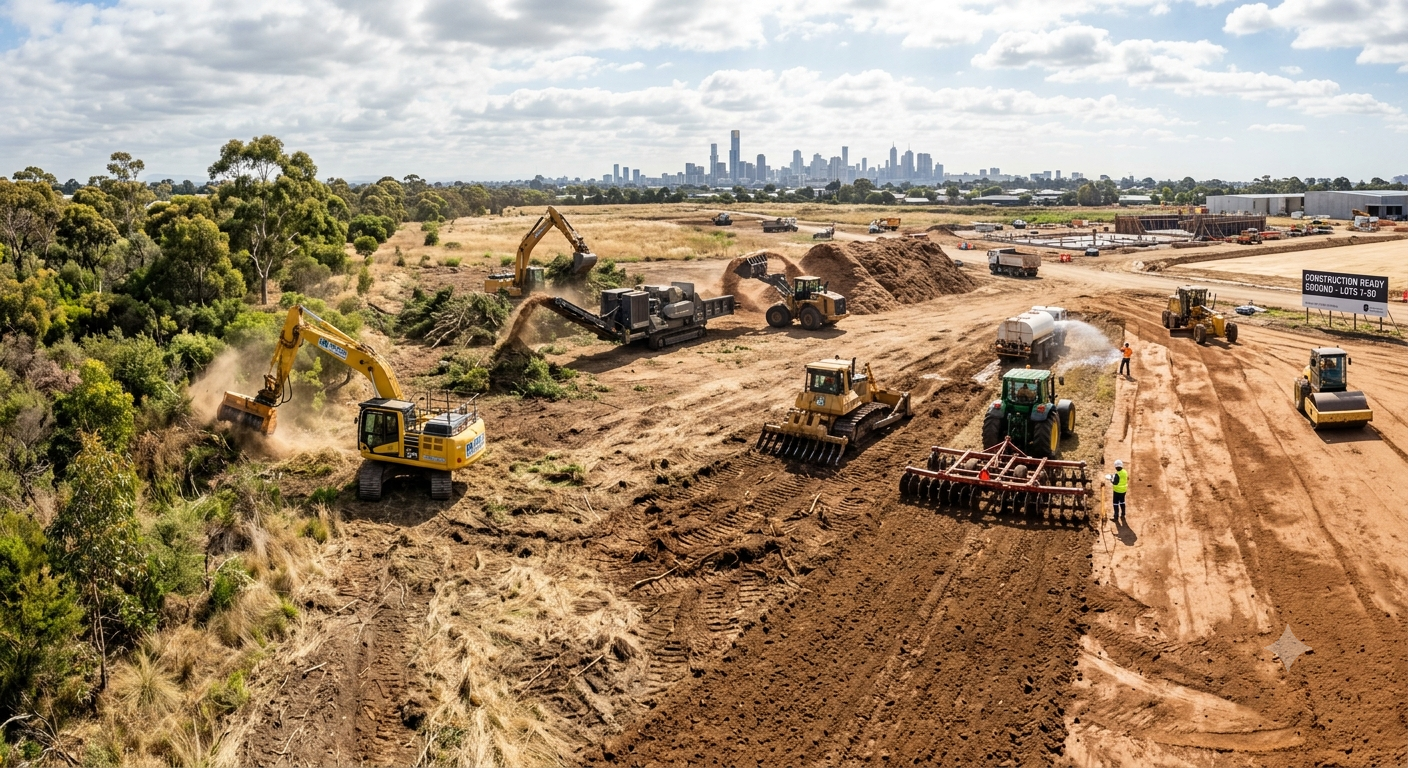
Introduction: Preparing Land for Successful Construction
Transforming overgrown land into construction-ready ground involves much more than removing weeds, trees, and unwanted materials. Land preparation requires a coordinated approach that addresses vegetation clearing, soil recovery, waste processing, and site conditions before construction begins. In Melbourne, properties awaiting residential, commercial, industrial, or infrastructure development may present different challenges depending on their previous use, soil composition, drainage patterns, and the amount of accumulated waste. Without a structured preparation process, developers may encounter unexpected delays, additional disposal costs, and ground conditions that require further remediation. We understand that successful site preparation depends on bringing the right processes together in the correct sequence, ensuring that each stage supports the next. By coordinating clearing, soil management, and responsible waste handling, we help establish a practical foundation for construction projects to move forward with greater confidence.
Understanding the Condition of Overgrown Land
Overgrown land can conceal a range of issues that are not immediately visible during an initial site visit. Dense vegetation may cover discarded building materials, buried rubbish, uneven ground, damaged drainage channels, or areas affected by previous site activities. In some locations, invasive plant species may have spread across the property, while established trees and extensive root systems can complicate access and excavation. Previous industrial or commercial uses may also raise concerns about contaminated soil, unidentified materials, or unsuitable fill. Before deciding how to clear a site, we consider its existing condition, intended use, access requirements, and any known environmental or safety constraints. A thorough preliminary assessment helps identify the work required and supports better decisions about equipment, labour, soil treatment, and waste processing.
Planning a Coordinated Land Clearing Strategy
Effective land clearing begins with a clear understanding of what must be removed and what should be retained. Not every tree, shrub, or natural feature needs to be cleared, particularly where vegetation protection requirements, planning approvals, or environmental considerations apply. Our approach focuses on identifying the boundaries of the work, establishing suitable access routes, and determining how cleared materials will be separated and managed. Planning these activities together reduces the likelihood of moving the same material multiple times or creating unnecessary obstacles for machinery. We also consider the sequence of clearing operations in relation to erosion control, drainage, soil recovery, and subsequent earthworks. This coordinated strategy helps make land preparation more efficient while reducing avoidable disturbance to the surrounding environment.
Removing Vegetation Without Compromising Soil Quality
Vegetation removal is often one of the first physical activities required when preparing an overgrown property for development. Depending on the site, the work may involve slashing tall grass, removing shrubs, cutting down approved trees, extracting selected roots, and clearing accumulated organic debris. The equipment and techniques used should reflect the density of vegetation, ground conditions, available working space, and the potential impact on surrounding properties. Heavy machinery can be effective on larger sites, but inappropriate operation may compact the soil or disturb areas that need to remain stable. We therefore consider how vegetation clearing can be completed while preserving suitable topsoil and maintaining safe access for subsequent operations. Where practical, cleared vegetation is separated from mixed waste so that suitable green material can be directed towards appropriate recycling or processing facilities rather than unnecessary landfill disposal.
Assessing Soil Conditions Before Recovery or Reuse
Once vegetation and surface debris have been removed, the underlying ground becomes easier to assess. This stage is important because soil that appears suitable from the surface may contain unsuitable fill, construction residues, excessive organic matter, or contaminants associated with previous land use. Soil assessment may involve visual inspection, sampling, laboratory analysis, and geotechnical investigation, depending on the project's requirements and the level of uncertainty. We recognise that soil suitability cannot be established through appearance alone, particularly where the material may be reused on site or transferred elsewhere. Testing can help determine whether the soil is appropriate for landscaping, general fill, structural support, or other intended applications. Identifying limitations early allows developers to plan soil recovery, treatment, removal, or replacement before these issues interfere with construction activities.
Recovering Suitable Soil and Preserving Valuable Resources
Soil recovery can provide both environmental and practical benefits when it is incorporated into the initial site preparation plan. Topsoil often contains organic matter, nutrients, and biological activity that make it valuable for landscaping and other suitable applications. During clearing and earthworks, recoverable topsoil can be stripped separately and stored in designated areas to reduce mixing with subsoil, rubble, and general waste. Storage conditions matter because prolonged exposure, poor drainage, excessive compaction, and erosion can reduce soil quality. We support a considered approach to soil handling that prioritises suitable material for beneficial reuse wherever its quality and intended application permit. When recovered soil cannot be reused directly, further assessment can establish whether processing or treatment is appropriate, helping avoid unnecessary disposal while maintaining responsible environmental management.
Managing Contaminated or Unsuitable Soil Responsibly
Some Melbourne development sites require additional attention because their soil may have been affected by historical industrial operations, fuel storage, chemical use, demolition activities, or imported fill. Such conditions cannot be resolved simply by removing the visible surface material or spreading the soil elsewhere. Where contamination is suspected, an appropriately qualified environmental professional can determine the necessary investigation, sampling, risk assessment, and management measures. The findings may identify soil that can remain in place under suitable controls, material that requires treatment, or waste that must be transported to an appropriately authorised facility. We recognise the importance of keeping potentially contaminated material separate from clean soil to prevent cross-contamination during excavation, loading, and transport. Following the relevant environmental requirements and project-specific recommendations helps protect workers, neighbouring properties, future occupants, and the surrounding environment.
Coordinating Earthworks with Site Access and Drainage
Clearing, soil recovery, and earthworks are closely connected, so their sequencing should reflect the physical conditions of the property. If machinery cannot move safely across the site, vegetation removal and material transport may take longer than expected. Similarly, poor drainage can leave cleared ground waterlogged, increase erosion, and make it difficult to achieve the required formation levels. Our planning considers temporary access routes, water movement, surface stability, and the location of material stockpiles before extensive machinery operations begin. Appropriate erosion and sediment controls are particularly important where exposed soil could be carried into nearby streets, drains, waterways, or adjoining land during rainfall. Coordinating these measures helps maintain workable site conditions and reduces the risk of corrective work before foundations, services, pavements, or landscaping can proceed.
Integrating Waste Processing into the Clearing Process
Waste management should be planned before clearing starts rather than treated as a separate task at the end of the project. Overgrown properties can contain green waste, timber, concrete, bricks, metal, plastics, packaging, and mixed materials left by previous occupants or contractors. When these materials are mixed together, recycling opportunities may be reduced and disposal requirements can become more complicated. We encourage waste streams to be identified and separated as early as practical, allowing suitable materials to be directed towards appropriate recovery or processing pathways. This approach can improve material handling, reduce avoidable transport, and provide greater visibility over the quantities requiring disposal. For Melbourne projects, the destination and processing method must be appropriate to the waste classification, facility permissions, and applicable Victorian requirements.
Recycling Construction and Demolition Materials
Construction and demolition materials can represent a significant portion of the waste generated during the preparation of previously developed land. Concrete, bricks, masonry, and certain asphalt materials may be suitable for processing into recycled aggregates when they meet the relevant quality and acceptance requirements. Metals can often be recovered through established recycling channels, while untreated timber may have different reuse or processing options depending on its condition and composition. However, not every material is suitable for recycling, and treated timber, asbestos-containing products, contaminated rubble, and other hazardous materials require separate consideration. We recognise that identifying materials correctly is essential to selecting the appropriate processing facility and avoiding contamination of otherwise recoverable resources. By integrating material separation with the broader clearing plan, projects can improve resource recovery while maintaining the standards required for safe and compliant waste management.
Handling Green Waste and Organic Materials
Green waste management is another important component of transforming neglected land into a development-ready site. Grass, branches, leaves, shrubs, and other vegetation can accumulate quickly when a property has remained unmanaged for an extended period. Depending on the material and the receiving facility's requirements, suitable green waste may be chipped, composted, or processed for another approved beneficial use. Separating organic materials from rubble, plastics, treated timber, and general rubbish helps preserve their recovery potential. We consider the volume of vegetation, the available storage area, and the timing of collection or processing when planning this stage of the work. A well-managed green waste stream can reduce the quantity of mixed material requiring disposal and contribute to a more resource-conscious land preparation process.
Understanding Waste Classification and Victorian Requirements
Responsible waste processing requires more than choosing a nearby disposal facility. In Victoria, waste must be managed according to its characteristics, classification, and the legal requirements that apply to its transport, storage, treatment, recycling, and disposal. Certain materials may require testing or documentation before a receiving facility will accept them, while hazardous waste can involve additional handling and transport obligations. Asbestos-containing materials, potentially contaminated soil, and unidentified substances should not be treated as ordinary site rubbish. We recognise that clear records, suitable contractors, and authorised destinations are important parts of managing these risks. Developers should confirm the applicable requirements with the relevant Victorian authorities and qualified environmental professionals, particularly where the site has a history of industrial use or the waste classification is uncertain.
Protecting Neighbouring Properties and the Surrounding Environment
Land clearing can affect more than the property being prepared for construction. Dust, noise, vehicle movements, sediment runoff, and the spread of debris can create problems for neighbouring residents, nearby businesses, and local infrastructure if they are not managed carefully. Site activities should therefore account for surrounding land uses, access restrictions, working hours, and any relevant permit conditions. We consider practical measures such as maintaining orderly material stockpiles, controlling dust, managing stormwater, and keeping access points clear of loose soil and debris. Where vegetation removal could affect protected trees, wildlife habitat, or sensitive areas, appropriate checks and approvals should be completed before work begins. These precautions support a safer and more considerate process while helping reduce disruptions that could otherwise affect the wider project.
Improving Project Efficiency Through Better Sequencing
A coordinated preparation programme can reduce the delays that occur when clearing, soil management, and waste handling are organised independently. For example, clearing a large area before establishing a waste collection strategy can result in congested stockpiles and repeated material movements. Removing topsoil without planning where it will be stored may create avoidable handling costs or damage material that could otherwise be reused. Similarly, arranging earthworks before assessing potentially unsuitable soil can lead to excavation delays and unexpected transport requirements. We focus on aligning these activities so that the completion of one stage creates the right conditions for the next. Clear responsibilities, realistic scheduling, and communication between site managers, equipment operators, waste contractors, and environmental specialists help maintain progress and reduce unnecessary rework.
Controlling Costs Through Early Planning
The cost of preparing overgrown land depends on several factors, including site size, vegetation density, access, soil condition, waste volumes, transport distances, and the need for specialist services. Unexpected buried debris or unsuitable fill can significantly change the scope of work if these issues are discovered after machinery and disposal arrangements have already been committed. Early assessment allows project teams to identify likely cost drivers and develop more realistic estimates for labour, equipment, processing, testing, and disposal. We also recognise the financial value of separating recoverable materials from waste that requires disposal, provided the proposed recovery options are technically suitable and commercially practical. Tracking material quantities and documenting disposal or recycling destinations can help developers understand where resources are going and identify opportunities for improvement. Although not every risk can be eliminated before work starts, coordinated planning can reduce uncertainty and support better control over the overall site preparation budget.
Establishing Construction-Ready Ground
Completing vegetation clearing and waste removal does not automatically mean that a site is ready for building work. The ground may still require grading, excavation, compaction, drainage improvements, or the removal and replacement of unsuitable material. Requirements differ according to whether the property will support residential foundations, commercial buildings, industrial facilities, driveways, car parks, or landscaped areas. Geotechnical advice and engineering specifications should determine the appropriate ground preparation and verification procedures for the intended development. We understand that construction readiness depends on confirming that the site meets the relevant design requirements, not simply achieving a clean and accessible surface. Final inspections, material records, testing results, and any required environmental documentation can help establish that the preparation work has been completed to the standard expected for the next phase.
Why Local Knowledge Matters for Melbourne Projects
Melbourne development sites vary considerably, from established suburban blocks and former commercial properties to larger industrial parcels and undeveloped land on the city's expanding outskirts. Local conditions can influence access, drainage, vegetation management, soil handling, transport logistics, and the availability of suitable recycling or waste processing facilities. Urban properties may have restricted working areas and close neighbouring buildings, while larger sites can require more extensive machinery coordination and material transport. Seasonal rainfall and changing ground moisture can also affect the timing and practicality of clearing and earthworks. We consider these variables when planning site preparation so that the proposed approach reflects the actual conditions and intended use of the land. Combining local project knowledge with appropriate technical advice and regulatory checks helps establish a more reliable pathway from initial clearing to construction readiness.
Choosing a Coordinated Site Preparation Partner
Selecting a site preparation partner involves looking beyond the ability to remove vegetation or transport waste. Developers benefit from working with a team that understands how clearing, soil handling, material recovery, and waste processing affect one another throughout the project. Clear communication about the work scope, site constraints, material destinations, and responsibilities helps prevent gaps between contractors and reduces the chance of costly misunderstandings. We believe that a coordinated approach should prioritise safety, responsible resource management, compliance, and practical delivery rather than treating each activity as an isolated service. Before work begins, project stakeholders should establish expectations for documentation, testing, waste classification, site access, and completion criteria. NGE Group recognises the importance of bringing these considerations together to help clients progress from neglected land towards a more organised and suitable construction site.
Conclusion: Turning Overgrown Land into a Valuable Development Site
Preparing overgrown land for construction is a multi-stage process that requires careful coordination, informed decision-making, and responsible material management. Vegetation clearing creates access and reveals the underlying ground, while soil assessment determines which materials can be recovered, reused, treated, or removed. Waste separation and processing help recover valuable resources and ensure that unsuitable materials are directed towards appropriate facilities. When these activities are planned alongside drainage management, earthworks, environmental controls, and project scheduling, developers can reduce avoidable delays and improve the quality of site preparation. Our approach focuses on understanding the conditions of each property and coordinating the work needed to support its intended future use. For landowners and developers across Melbourne, NGE Group can help bring greater structure to the journey from overgrown ground to a site prepared for its next stage of development.
