
Understanding the Importance of Utility-Aware Tree Removal
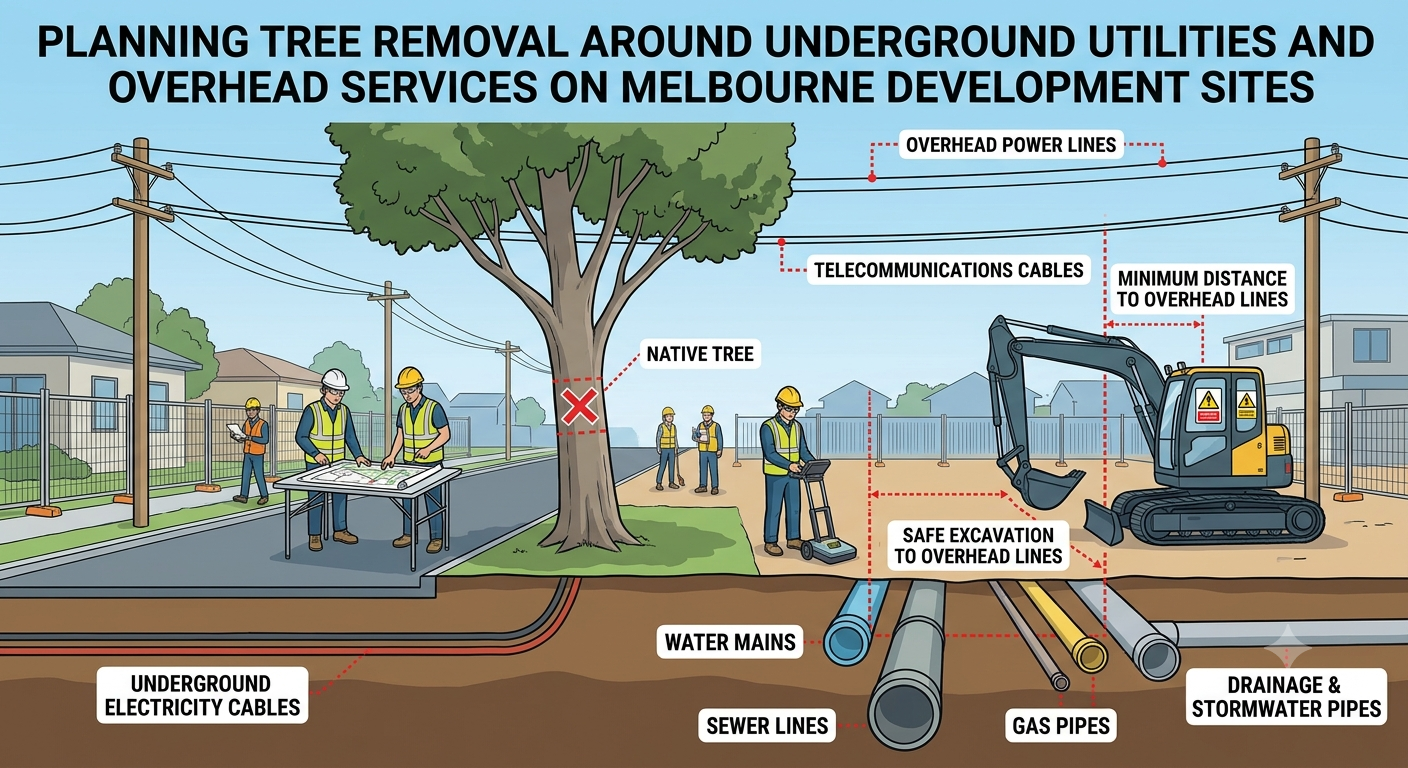
Tree removal on development sites requires careful planning, particularly when underground utilities and overhead services are located near existing trees. In Melbourne, construction projects frequently involve complex service networks, including electricity cables, water pipes, gas lines, telecommunications infrastructure and sewer connections. These services can be positioned close to tree roots, trunks and canopies, creating potential hazards during removal. Poorly planned tree removal can result in damaged infrastructure, unexpected project delays, expensive repairs and serious safety risks for workers and the surrounding community. At NGE Group, we recognise that identifying these risks early is essential for coordinating tree removal with excavation, demolition and other site preparation activities. By understanding the relationship between trees, utilities and proposed construction works, we can help developers establish a safer and more efficient approach to preparing their sites.
Why Utility Identification Must Come Before Tree Removal
Before removing a tree, it is important to establish the location of all underground and overhead services within the proposed work area. Existing utility records can provide useful information, but these records should not automatically be treated as an exact representation of the infrastructure beneath the ground. Services may have been installed or modified over time, and older records may not reflect their current positions or depths. Developers should arrange appropriate service locating and verification before authorising work that could disturb the ground or bring machinery close to electrical infrastructure. In Victoria, Before You Dig Australia provides a starting point for requesting information from participating asset owners about underground infrastructure near a proposed work site. The information received must be assessed alongside site conditions, project drawings and any additional locating or verification required before work begins. This preparation allows the removal team to understand the potential constraints and select suitable methods for managing the tree safely.
Identifying Underground Services Beneath Tree Roots
Underground services can create significant challenges when tree removal involves large trees with extensive root systems. Water mains, sewer pipes, gas lines, electrical conduits and telecommunications cables may pass through areas where roots have developed over many years. During removal, heavy equipment, vehicle movements, stump grinding and root excavation can disturb these assets even when the trunk itself is some distance away. Roots may also have grown around existing infrastructure, making it difficult to determine the relationship between the tree and the service without further investigation. Before selecting a removal method, we assess the available information about the tree, its surroundings and the proposed construction activities to identify areas requiring additional attention. Where necessary, the project team should arrange appropriate service exposure or other verification through suitably qualified personnel before undertaking work that could affect the infrastructure. Understanding these conditions early helps reduce the likelihood of accidental damage and supports better coordination between arborists, excavators and civil contractors.
Managing Tree Roots Near Water, Sewer and Gas Infrastructure
Water, sewer and gas infrastructure requires particular consideration when planning tree removal on Melbourne development sites. Root systems can extend well beyond the visible canopy, and their actual distribution depends on factors such as soil conditions, moisture availability, tree species and the location of existing services. Although roots do not automatically damage every pipe they encounter, existing cracks, leaking joints and other defects can provide opportunities for root intrusion. Removing a tree does not eliminate the need to protect nearby infrastructure, especially when excavation or stump removal is planned immediately afterwards. Mechanical excavation, aggressive root cutting and deep stump grinding may create additional risks where the position and condition of underground assets are uncertain. We recommend that developers coordinate with the relevant asset owners and qualified contractors whenever planned work approaches sensitive pipes or service connections. This approach helps establish suitable exclusion areas, identify permissible work methods and prevent avoidable disruptions to existing infrastructure.
Planning Around Underground Electrical Cables and Telecommunications Lines
Underground electrical cables and telecommunications infrastructure can be difficult to identify visually because they are concealed beneath soil, paving, landscaping or existing construction materials. A tree removal crew may encounter these services when preparing access routes, removing surface roots or grinding a stump below ground level. Even relatively shallow work can present a hazard if the service location or depth differs from the information shown on available plans. Electrical infrastructure is particularly important because accidental contact can expose workers to serious injury and interrupt power supplies to surrounding properties. Telecommunications damage can also affect communications, security systems and business operations, creating consequences beyond the immediate development site. Before work commences, the responsible team should confirm the relevant service information, communicate identified hazards and establish controls appropriate to the equipment and removal method being used. Where uncertainty remains, work should not proceed in the affected area until the location and risks have been adequately assessed by competent personnel.
Managing Trees Beneath Overhead Electrical Services
Overhead electrical services introduce a different set of risks because tree branches, trunks, lifting equipment and machinery can approach live conductors during removal. A tree that appears straightforward to fell may become hazardous when its canopy extends beneath powerlines or when the trunk could fall towards nearby electrical infrastructure. Branches can also move unpredictably under tension, while wind and changes in load during cutting can affect their direction of movement. Conventional felling methods may therefore be unsuitable where available clearance is restricted or where the tree cannot be brought down safely within the designated work area. We understand the importance of assessing canopy spread, tree height, access limitations and nearby electrical assets before selecting a removal strategy. Depending on the circumstances, the work may require a suitably qualified arborist, specialised equipment, an approved exclusion zone or coordination with the electricity distributor. Any work near electrical assets must follow the applicable safety requirements, and required isolation or other authorised controls must be arranged before work proceeds where necessary.
Protecting Telecommunications, Street Lighting and Other Overhead Assets
Not all overhead services involve high-voltage electrical infrastructure, but other assets can still affect the safe removal of trees on development sites. Telecommunications cables, street lighting connections and overhead service leads may cross boundaries, run beside access routes or pass through tree canopies. These assets can be damaged by falling branches, swinging timber, elevated work platforms or the movement of lifting equipment. A removal plan should consider the position of these services alongside fences, neighbouring buildings, public footpaths and road access. The assessment should also account for the possibility that a branch or trunk may move beyond its expected path during cutting or lowering. Where clearance is restricted, the removal team may need to dismantle the tree in controlled sections rather than attempt a single felling operation. Careful coordination with the relevant service providers and site management team helps maintain suitable clearances and reduces the likelihood of damage to neighbouring infrastructure.
Conducting a Pre-Removal Site Assessment
A thorough site assessment provides the foundation for safe and efficient tree removal. The assessment should establish the tree species where possible, approximate height, trunk diameter, canopy spread, visible defects and the condition of the surrounding ground. It should also identify underground service corridors, overhead conductors, existing structures, boundary restrictions and areas where machinery can operate safely. Developers should provide the removal team with current site plans, proposed excavation layouts and information about planned demolition or civil works. These details help determine whether the tree can be removed using conventional methods or whether specialised equipment and additional controls will be required. At NGE Group, we recognise that a well-coordinated assessment can help identify practical constraints before they affect the construction programme. Documenting the findings and communicating them to the relevant contractors ensures that everyone understands the hazards, responsibilities and agreed work boundaries before removal begins.
Using Service Plans and On-Site Verification Together
Service plans are an important planning resource, but they should be interpreted alongside physical site conditions and appropriate verification. Plans may show approximate alignments, recorded depths or asset corridors, yet they cannot always account for undocumented changes, previous repairs or differences in ground levels. A service locator can help identify likely underground routes, while additional methods may be required to confirm the exact position of a service before excavation. Depending on the asset and the site conditions, verification may involve non-destructive digging or carefully controlled exposure carried out by appropriately qualified personnel. The chosen method should reflect the level of uncertainty, the consequences of damaging the asset and the requirements of the relevant service owner. Developers should also ensure that the findings are communicated to tree removal crews before stump grinding, root excavation or heavy machinery operations begin. Combining records with suitable on-site verification creates a more reliable basis for deciding where work can proceed and which areas require additional protection.
Choosing the Right Tree Removal Method for Restricted Sites
The safest tree removal method depends on the tree's dimensions, structural condition, available working space and proximity to services. On an open site with adequate clearance, controlled directional felling may be appropriate following a competent assessment. On constrained development sites, sectional dismantling can allow branches and trunk sections to be removed progressively, reducing the space required for each part of the operation. Crane-assisted removal may also be considered where access, ground bearing capacity and lifting arrangements permit its safe use. However, cranes, elevated work platforms and other machinery introduce their own clearance, stability and load-management requirements, particularly near overhead conductors. Stump removal must be planned separately because the root plate and grinding area may overlap underground infrastructure even after the visible tree has been removed. We assess the available options against the site's specific conditions so that the chosen approach supports both worker safety and the protection of existing assets.
Establishing Safe Work Zones and Machinery Access
Safe work zones help prevent people, vehicles and equipment from entering areas where tree removal hazards are present. These zones should account for the potential fall area, falling branches, suspended loads, moving machinery and any identified underground or overhead services. The required boundaries depend on the removal method, tree characteristics, equipment being used and applicable safety requirements rather than a single universal distance. Access routes should be planned to avoid placing heavy machinery over vulnerable underground services or positioning equipment where it could encroach on overhead electrical clearances. Ground conditions also need consideration because soft soil, trenches, embankments and recently disturbed areas can affect vehicle stability and equipment operation. Site supervisors should communicate exclusion zones clearly, control access and review the arrangements if the work area or removal method changes. These measures help create a predictable working environment while allowing other development activities to be coordinated around the removal operation.
Coordinating Tree Removal With Excavation and Demolition
Tree removal is often one component of a broader site preparation programme involving demolition, bulk excavation, drainage installation and foundation construction. If these activities are scheduled without adequate coordination, one contractor may disturb an area that another contractor has already identified as containing sensitive infrastructure. For example, a tree may be removed safely, but subsequent stump grinding or excavation could still damage a nearby service if the relevant restrictions are not carried forward into the next stage. Developers should therefore integrate tree removal into the overall construction sequence rather than treat it as an isolated task. Pre-start meetings, current site drawings and clearly assigned responsibilities can help align arborists, civil contractors, demolition teams and utility specialists. The programme should also allow sufficient time for service locating, approvals, specialist equipment arrangements and any required electrical isolation. At NGE Group, we understand that early coordination supports safer site preparation and helps reduce avoidable delays caused by conflicting work activities.
Understanding Victorian Safety Requirements and Permits
Tree removal near utilities must be planned in accordance with applicable Victorian laws, workplace safety requirements, local council controls and the conditions imposed by relevant infrastructure owners. Work near electrical assets requires particular care, and specific activities may be restricted to appropriately qualified and authorised workers operating under prescribed safety arrangements. Depending on the location and scope of the project, a tree removal permit or other approval may also be required from the relevant council or authority. Planning controls, vegetation protection overlays, heritage considerations and restrictions on public land can affect whether a tree may be removed and when the work can take place. Developers should confirm the applicable requirements before engaging a removal contractor or commencing site preparation. They should also ensure that contractors understand their respective duties, including the need to stop work if unexpected infrastructure or unsafe conditions are discovered. Checking current requirements with the relevant regulator, council and asset owner helps ensure that the proposed work is properly authorised and appropriately controlled.
Managing Unexpected Services and Unidentified Hazards
Even with detailed preparation, development sites can contain unexpected infrastructure that is not shown on available plans. Workers may encounter unrecorded cables, abandoned pipes, shallow service connections or infrastructure whose location differs from the original drawings. If a suspected service is discovered during tree removal or associated excavation, the affected work should stop while the hazard is assessed. Workers should not assume that a cable or pipe is disconnected, redundant or safe to handle simply because its purpose is unclear. The site supervisor should secure the immediate area, prevent unauthorised interference and contact the appropriate service owner or qualified specialist for advice. Any damage, suspected electrical contact or gas leak must be managed through the relevant emergency procedures and asset owner requirements. Recording the discovery and updating the site documentation can help prevent the same hazard from affecting later construction activities.
Protecting Workers, Neighbours and the Public
Tree removal on urban Melbourne development sites can affect more than the immediate work crew. Nearby residents, pedestrians, road users, adjoining businesses and other contractors may be exposed to hazards if branches, equipment or debris enter areas outside the controlled work zone. Overhead services and underground infrastructure can increase these risks by restricting access, limiting the available removal direction or requiring specialised equipment. A suitable site plan should identify public interfaces, establish barriers where necessary and specify how pedestrian or vehicle movements will be managed during the operation. Noise, dust, traffic restrictions and temporary access changes should also be considered when determining the timing of the work. Clear communication with neighbouring properties and relevant authorities may be necessary where removal affects shared access or public space. A coordinated approach helps protect the wider community while allowing the development project to proceed with fewer interruptions.
Preparing Documentation and Communicating Responsibilities
Good documentation helps ensure that identified utility risks remain visible throughout the tree removal and subsequent construction stages. Relevant records may include service plans, locating reports, site assessment findings, photographs, risk assessments, permits and details of any agreed restrictions. The project team should also document the selected removal method, equipment requirements, exclusion zones and procedures for responding to unexpected conditions. Responsibilities should be assigned clearly so that the contractor, site supervisor and relevant specialists understand who is responsible for verification, approvals and work coordination. Updated information should be distributed whenever service locations, site layouts or construction activities change. This is particularly important when multiple contractors are working in the same area or when removal is completed in stages. By maintaining accurate records and clear communication, developers can improve accountability and reduce the chance of important safety information being overlooked.
Reducing Project Delays Through Early Planning
Unexpected utility damage can have consequences that extend well beyond the immediate repair. A damaged water main may require emergency repairs and affect neighbouring properties, while an electrical incident can create serious safety concerns and interrupt essential services. Delays may also arise when work must stop because a service has not been located, a permit is outstanding or specialised equipment has not been arranged. These disruptions can affect excavation schedules, subcontractor availability and planned construction milestones. Early utility investigations allow developers to identify potential constraints while there is still time to adjust the programme and organise the appropriate resources. Scheduling tree removal after the necessary approvals and service checks have been completed can also reduce conflicts with other site activities. Although careful planning requires time and coordination, it can help prevent costly interruptions and create a more reliable pathway towards construction readiness.
A Practical Approach to Tree Removal on Melbourne Development Sites
Effective tree removal planning begins with a clear understanding of the site, the proposed development and the infrastructure that must remain protected. Developers should arrange service searches, assess underground and overhead constraints, confirm applicable approvals and select a removal method suited to the conditions. They should also ensure that contractors have access to current plans, understand the agreed work boundaries and know how to respond if unexpected hazards arise. Particular attention should be given to stump grinding, root excavation and machinery movements because these activities can affect infrastructure after the main tree removal has been completed. Communication between arborists, utility specialists, civil contractors and site supervisors is essential for maintaining consistent controls throughout the process. At NGE Group, we recognise that careful coordination and informed planning are important parts of preparing development sites safely and efficiently. Taking these steps before work begins helps protect existing services, support construction timelines and establish a more dependable foundation for the next stage of development.
Planning tree removal around underground utilities and overhead services requires more than identifying which trees need to be cleared. It involves understanding service locations, evaluating site constraints, selecting appropriate removal methods and coordinating the work with the broader development programme. Melbourne sites can present complex conditions where established root systems, restricted access, overhead conductors and concealed infrastructure create additional challenges. Developers who address these issues early are better positioned to manage risks, avoid preventable service damage and maintain progress across connected construction activities. Service records, on-site verification, qualified contractors and clear communication all contribute to a more controlled removal process. By treating tree removal as an integrated part of site preparation, project teams can protect workers, neighbouring properties and essential infrastructure while improving overall project coordination. Careful planning ultimately helps create safer, more efficient development sites that are ready for the next phase of construction.
