
What Melbourne Green Waste Grinding Can Recover From a Large Vegetation Clearing Project
Understanding Green Waste Recovery
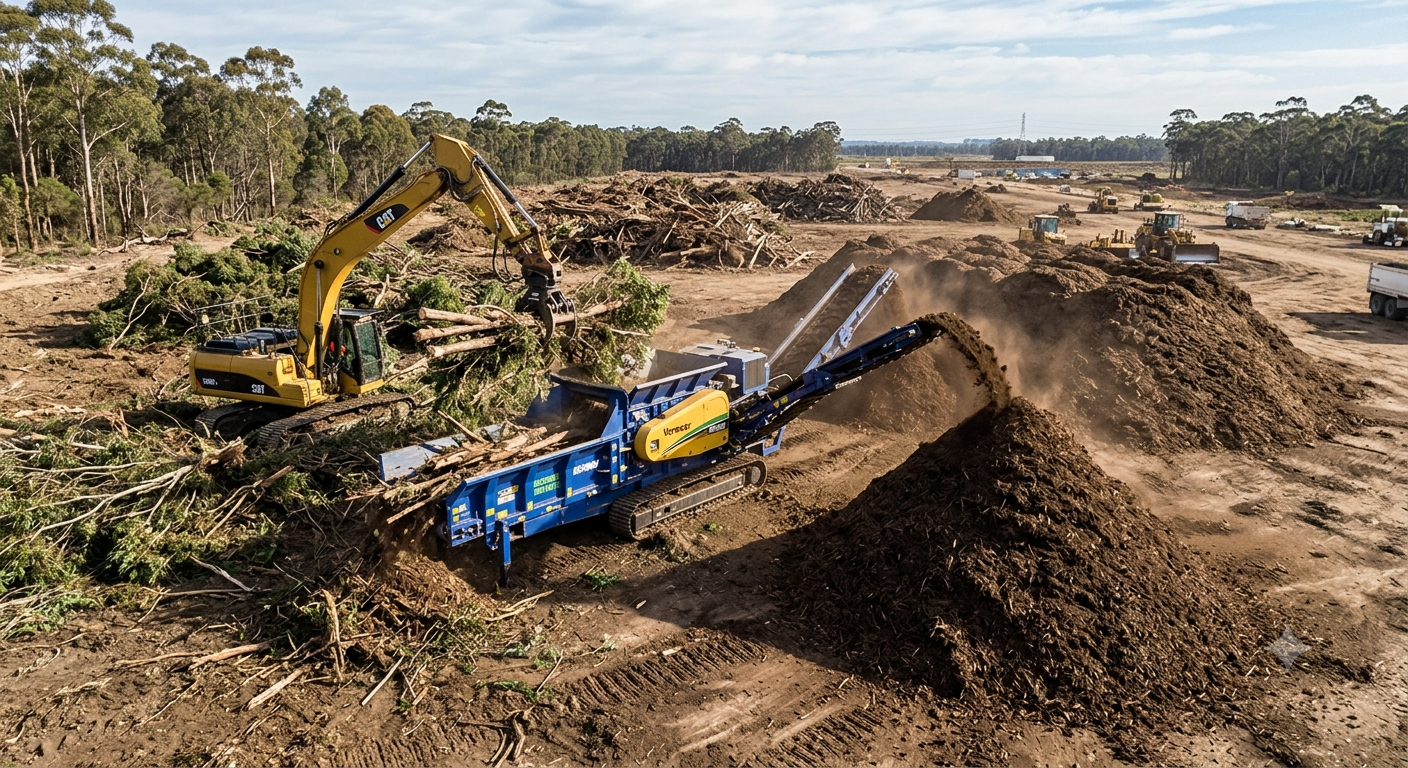
Large vegetation clearing projects in Melbourne can generate substantial volumes of branches, trunks, stumps, logs, leaves and other organic material. Without an appropriate recovery process, much of this material can become difficult to manage and may occupy valuable space at disposal facilities. Green waste grinding provides a practical way to process cleared vegetation and convert bulky material into useful recovered products. The grinding process reduces the size of vegetation and creates a more manageable material stream for further processing or reuse. Depending on the composition of the incoming material, several valuable resources can be recovered from a single clearing project. At NGE Group, we use appropriate processing methods to help Melbourne projects manage vegetation waste efficiently while supporting responsible material recovery.
Recovering Timber From Cleared Vegetation
Large vegetation clearing projects often contain substantial quantities of woody material that can be separated during processing. Logs, branches and larger timber pieces can have potential value when they are suitable for reuse or further processing. The condition, species, size and contamination level of the timber can influence how it should be handled after clearing. Some material may be suitable for direct reuse, while other timber may require grinding or additional processing before it can be repurposed. Separating usable timber from general green waste can therefore improve overall resource recovery from a project. Careful material assessment helps ensure that potentially useful resources are not unnecessarily treated as disposal material.
Producing Reusable Wood Chip
One of the most visible outputs from green waste grinding is processed wood chip. Branches, smaller logs and other woody vegetation can be reduced into a consistent material suitable for a range of applications. Depending on the characteristics of the finished product, wood chip may be used for landscaping, ground cover, erosion management or other appropriate purposes. Processing also makes bulky vegetation significantly easier to transport, stockpile and manage across a project site. The final quality of the material depends on factors such as feedstock composition, moisture content, contamination and grinding specifications. For Melbourne projects, producing a useful wood chip product can turn a large volume of cleared vegetation into a more manageable resource.
Recovering Organic Material
Vegetation clearing does not only produce woody material because leaves, smaller branches, bark and other organic components can also form a significant portion of the waste stream. Grinding these materials can create an organic rich output that may have potential for beneficial reuse when processed and managed appropriately. The exact application depends on the material composition and the requirements associated with its intended end use. Keeping organic material within a controlled recovery stream can reduce the amount of vegetation requiring disposal. It can also support more efficient handling when large clearing projects generate material faster than it can be transported away. Effective separation and processing are therefore important parts of maximising the recovery potential of green waste.
Stump Material and Root Systems
Stumps and root balls can present particular challenges during large vegetation clearing projects because they are heavy, irregular and often contain soil. Once removed from the ground, these materials may require preparation before they can be processed efficiently through suitable grinding equipment. Removing excessive soil and other unwanted material can improve processing performance and reduce contamination within the recovered output. After suitable preparation, woody portions of stumps and roots can potentially be processed into a usable organic or woody material. The recovery potential will depend heavily on the amount of attached soil, stones and other contaminants. Proper site preparation can therefore make a significant difference to the amount of useful material recovered from vegetation clearing.
Separating Soil From Vegetation
Large clearing operations can produce mixed material containing soil, roots, stones, timber and organic vegetation. Processing this mixture without appropriate separation can reduce the quality of the recovered material and increase wear on equipment. Screening and separation processes can help distinguish soil and other fine materials from larger organic components. Recovered soil may have potential for suitable onsite or offsite use when it meets the relevant project and environmental requirements. Removing excess soil from woody material can also improve the consistency of the final ground vegetation product. This approach helps create cleaner material streams and provides greater control over what happens to each recovered component.
Recovering Material for Landscaping
Processed green waste can have practical applications in landscaping when the material meets the necessary quality requirements. Wood chip and similar organic products may be suitable for use as mulch, ground cover or other landscaping applications. Reusing processed vegetation can reduce the need to transport and dispose of large quantities of raw clearing material. It can also provide a useful source of organic material for suitable projects instead of relying entirely on newly sourced products. The suitability of recovered material depends on factors including contamination, particle size, moisture and the intended application. Proper grinding and screening can therefore help produce a more consistent material that is easier to manage and potentially reuse.
Supporting Erosion Control
Vegetation clearing can leave exposed areas that require appropriate management to minimise erosion risks. In suitable circumstances, processed organic material can contribute to ground cover strategies that help protect exposed soil. Wood chip and other processed vegetation products can help reduce the direct impact of rainfall on vulnerable surfaces when used as part of an appropriate site management approach. Their use can also help retain organic matter on suitable areas while reducing the volume of material leaving the project site. The correct application depends on the site's conditions, drainage requirements and environmental management plan. Green waste recovery can therefore form part of a broader approach to managing both cleared vegetation and disturbed ground.
Reducing Transport Requirements
Raw vegetation takes up considerably more space than processed material because branches, trunks and other pieces create large irregular voids during transportation. Grinding reduces the physical volume of suitable vegetation and can make the resulting material considerably easier to stockpile and transport. This can help improve vehicle utilisation when large quantities of vegetation need to leave a project site. Fewer transport movements may also help simplify site logistics where access, traffic management or working space is limited. The actual reduction in transport requirements will depend on the volume and composition of the material being processed. Planning grinding operations alongside clearing activities can therefore help create a more efficient material management workflow.
Recovering Value From Large Clearing Projects
The scale of a vegetation clearing project can make even small improvements in material recovery significant. A large site may contain thousands of tonnes of mixed organic material, with different components having different recovery opportunities. Identifying timber, woody vegetation, organic material, soil and unsuitable waste separately can help improve the overall efficiency of the operation. Processing material according to its characteristics can also reduce unnecessary handling and improve the quality of recovered outputs. Rather than treating every item removed from a site as waste, a structured recovery process looks at what can be separated, processed and reused. This approach can support better resource efficiency throughout the lifecycle of a major clearing project.
Managing Contamination During Grinding
Contamination is an important consideration when recovering material from vegetation clearing activities. Soil, rocks, concrete, metal, treated timber and other unwanted materials can enter the vegetation stream during demolition, excavation or site preparation. These materials can affect grinding performance and may reduce the suitability of the resulting organic product for reuse. Careful inspection and separation before processing can help prevent unsuitable materials from entering the grinder. Maintaining clean feedstock also supports better equipment performance and more consistent recovered material. At NGE Group, we recognise that effective recovery depends not only on grinding vegetation but also on controlling the quality of the material entering the processing system.
Planning Vegetation Recovery Before Clearing
The best recovery results often begin before vegetation is removed from the site. A project team can assess the types and quantities of vegetation present and identify likely recovery streams before clearing work begins. This allows suitable areas for stockpiling, processing and loading to be considered as part of the site plan. Early planning can also help identify potential contamination risks and determine whether timber, mulch, soil or other materials should be handled separately. Coordinating clearing and grinding activities can reduce unnecessary double handling and improve the flow of material through the project. For large Melbourne projects, advance planning can make vegetation recovery a defined part of the overall site management strategy rather than an activity considered after clearing is complete.
Choosing the Right Grinding Approach
Different vegetation clearing projects require different processing approaches because no two sites contain exactly the same material mix. A site dominated by large trunks and branches may require a different grinding configuration from a project containing mostly smaller vegetation and green organic material. Equipment selection should consider feedstock size, volume, contamination, access conditions and the required characteristics of the finished product. Processing capacity is also important when large quantities of vegetation need to be handled within a defined project timeframe. An appropriate grinding strategy can help maintain productivity while supporting the recovery of suitable material streams. Understanding the material before processing allows the operation to be planned around both site requirements and recovery objectives.
Building a More Efficient Recovery Process
Green waste grinding can transform the way large vegetation clearing projects approach material management. Instead of moving bulky vegetation directly into a disposal stream, grinding creates opportunities to recover timber, wood chip, organic material and other potentially useful resources. Separating different materials before and after processing can further improve the quality and usefulness of recovered products. Effective planning can also reduce unnecessary handling, improve transport efficiency and support better utilisation of available site space. These benefits become increasingly important as vegetation volumes grow and project schedules become more demanding. NGE Group works with Melbourne projects to support practical vegetation processing and resource recovery strategies suited to the characteristics of each site.
Large vegetation clearing projects can generate far more recoverable material than may initially be apparent. Timber, branches, wood chip, organic matter, stump material and suitable soil can all form part of a structured recovery process when they are correctly assessed and processed. Grinding reduces the physical size of bulky vegetation while creating material that may be easier to reuse, transport or manage. Separation and contamination control are equally important because the quality of recovered material depends on what enters the processing system. With appropriate planning, green waste processing can become an important component of efficient resource management across Melbourne construction and land clearing projects. NGE Group helps project teams approach vegetation grinding with a focus on practical processing, efficient handling and responsible recovery of suitable materials.
