
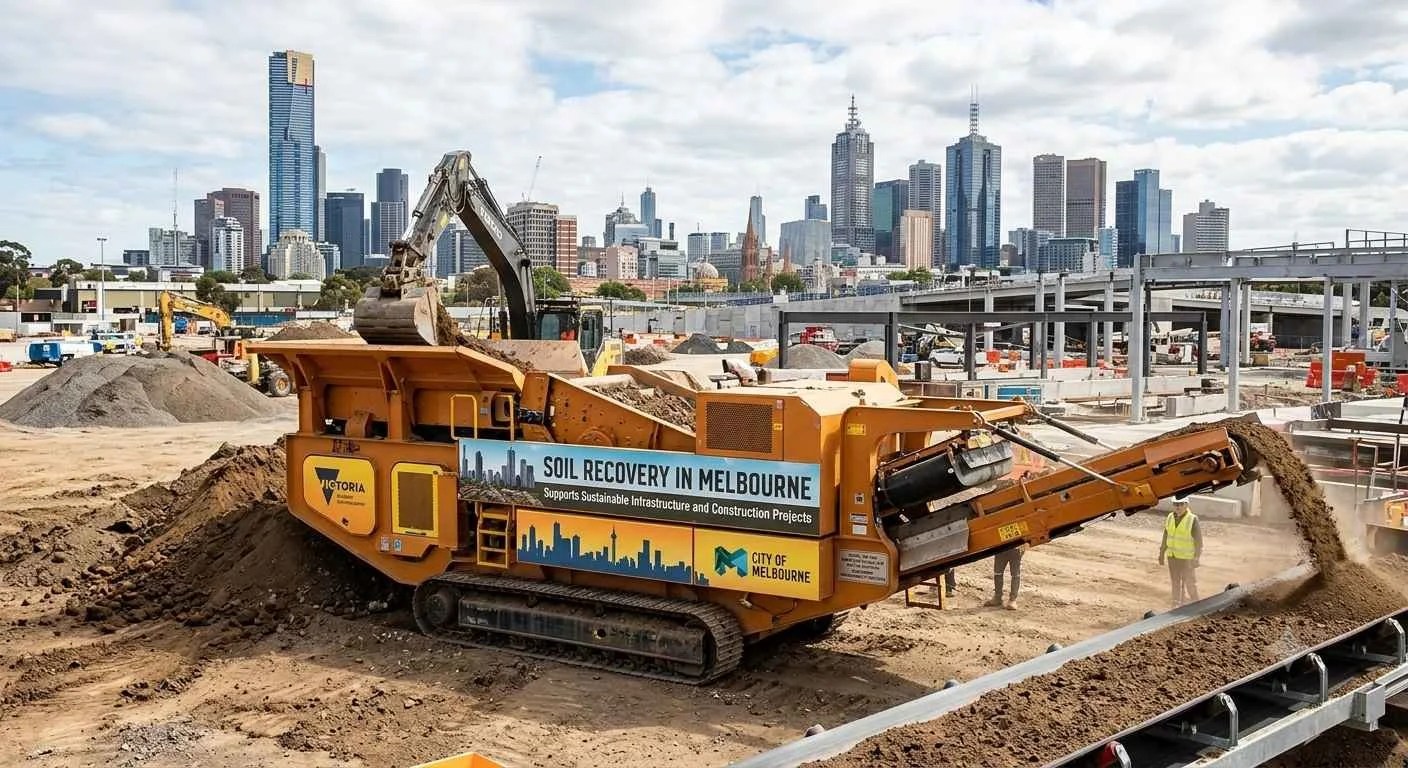
As Melbourne continues to expand through residential developments, commercial construction, transport upgrades, and major infrastructure projects, the importance of responsible land management is becoming increasingly clear. Every successful construction project begins with a suitable site, and soil conditions play a major role in determining how safely and efficiently that site can be developed. However, construction activities, industrial operations, excavation, and land clearing can significantly affect soil quality over time. Compacted ground, contaminated materials, nutrient depletion, and poor drainage can create challenges that extend well beyond the initial construction phase. Soil recovery provides an effective way to address these issues while supporting more sustainable approaches to land development. At NGE Group, we recognise that restoring soil quality is an important part of building infrastructure that delivers long-term environmental and practical benefits.
Understanding the Importance of Soil Recovery in Construction
Soil is one of the most valuable natural resources involved in infrastructure and construction projects. It provides the foundation for buildings, roads, landscaping, drainage systems, and other essential developments. When soil becomes degraded through construction activity or previous land use, its ability to support these applications can be reduced. Compaction can restrict water movement and root development, while contamination may create environmental risks that require careful management. Soil recovery focuses on improving these conditions through appropriate assessment, treatment, rehabilitation, and responsible material management. By addressing existing soil issues before construction progresses, developers can create more reliable site conditions and reduce the likelihood of future complications.
Supporting Sustainable Infrastructure Development Across Melbourne
Melbourne's infrastructure requirements continue to grow as new communities develop and existing urban areas undergo renewal. Roads, bridges, public spaces, commercial facilities, and residential developments all depend on effective site preparation and responsible environmental practices. Soil recovery supports these projects by helping restore land that may have been affected by previous development or industrial activities. Rehabilitated soil can improve site stability, support landscaping, and contribute to better stormwater management. It also allows suitable excavated materials to be assessed for potential reuse rather than automatically being classified as waste. This approach helps construction projects balance development requirements with environmental responsibility while making more efficient use of available resources.
Reducing Construction Waste Through Responsible Soil Management
Construction and excavation activities can generate considerable quantities of excess soil and other materials. Without proper assessment and management, potentially reusable materials may be transported to disposal facilities, increasing waste volumes and creating additional transportation requirements. Soil recovery offers an alternative by identifying materials that can be safely treated, processed, or reused in suitable applications. Depending on their condition and project requirements, recovered materials may be suitable for landscaping, site rehabilitation, filling, or other approved construction purposes. Responsible reuse can reduce the demand for newly sourced materials and limit unnecessary disposal. By incorporating soil recovery into construction planning, developers can improve resource efficiency and support more circular approaches to infrastructure development.
Improving Soil Stability and Ground Conditions
Ground stability is a critical consideration for almost every construction project, particularly where buildings, roads, retaining structures, and underground infrastructure are involved. Poor soil conditions can contribute to uneven settlement, drainage problems, erosion, and difficulties during excavation. Soil recovery helps address these challenges by improving the physical properties of affected ground through suitable remediation and rehabilitation techniques. Depending on the site assessment, this may involve reducing compaction, improving soil structure, managing unsuitable materials, or introducing appropriate soil amendments. Better soil conditions can support more predictable site preparation and improve the performance of subsequent construction activities. Although soil recovery does not replace geotechnical investigation or engineering design, it can form an important part of a broader strategy for creating stable and sustainable construction sites.
Managing Soil Contamination and Environmental Risks
Former industrial sites, commercial properties, and previously developed land may contain soil affected by hydrocarbons, heavy metals, chemicals, or other potentially harmful substances. Developing these locations without understanding the condition of the soil can create environmental and regulatory challenges. Soil recovery begins with identifying the nature and extent of any contamination through appropriate investigation and testing. Once the results are available, qualified professionals can determine the most suitable management or remediation approach based on the contamination levels, intended land use, and relevant environmental requirements. Depending on the circumstances, treatment, controlled removal, separation, or other approved remediation methods may be necessary. Effective management helps protect surrounding land, groundwater, construction workers, and nearby communities while making previously affected sites more suitable for responsible redevelopment.
Supporting Better Stormwater Management and Drainage
Water management is another important factor influencing the sustainability and performance of infrastructure projects. Compacted or degraded soil can restrict infiltration, increase surface runoff, and contribute to localised flooding or erosion. These problems can place additional pressure on stormwater infrastructure, particularly in developed urban areas where natural drainage systems have already been modified. Soil recovery can help improve ground conditions by restoring suitable soil structure and supporting better water movement where site conditions allow. Rehabilitated soil can also contribute to the effectiveness of landscaped areas, vegetated drainage systems, and other water-sensitive urban design features. By considering soil condition alongside drainage requirements, construction teams can create developments that manage rainfall more effectively and reduce unnecessary pressure on surrounding infrastructure.
Preserving Natural Resources Through Soil Reuse
Sustainable construction is not only about the materials used in buildings and infrastructure. It also involves understanding how existing natural resources can be protected and used more efficiently. Soil is often removed during excavation for foundations, utility installations, road construction, and basement developments. However, not all excavated material needs to become waste. Through suitable assessment and recovery processes, some materials may be reused within the same project or transported for an approved application elsewhere. This reduces reliance on virgin resources and can help limit the environmental impact associated with sourcing, transporting, and disposing of construction materials. Responsible soil reuse also encourages better coordination between excavation contractors, project managers, environmental consultants, and material recovery facilities.
Meeting Environmental Expectations and Construction Requirements
Environmental responsibility is becoming an increasingly important consideration for developers, contractors, and infrastructure authorities throughout Victoria. Construction projects must account for relevant environmental regulations, site-specific conditions, waste management requirements, and potential contamination risks. Soil recovery can support these responsibilities by creating a more structured approach to identifying, managing, and documenting soil materials. Appropriate sampling, classification, transportation, treatment, and disposal procedures help ensure that soil is handled according to its condition and intended destination. Project teams should also consider applicable Victorian environmental legislation and guidance, including requirements administered by the Environment Protection Authority Victoria. Working with experienced environmental and soil management professionals helps reduce uncertainty and supports more informed decisions throughout the construction process.
Extending the Life of Rehabilitated Construction Sites
The benefits of soil recovery should not be measured only by how quickly a construction site becomes ready for development. Long-term performance is equally important, especially where projects include landscaping, public open spaces, road verges, drainage corridors, and other areas that depend on healthy ground conditions. Rehabilitated soil can support vegetation establishment, reduce erosion risks, and improve the overall condition of developed land. Healthy vegetation also contributes to urban cooling, biodiversity, and improved landscape quality. When soil recovery is considered during the early stages of project planning, developers have a better opportunity to incorporate environmental improvements into the finished development. This creates lasting value for property owners, infrastructure operators, local communities, and the surrounding environment.
Why Early Soil Assessment Makes a Difference
One of the most effective ways to improve soil management outcomes is to assess site conditions before major construction activities begin. Early investigation allows project teams to identify potentially contaminated areas, understand soil characteristics, and determine whether excavated materials can be reused. Without this information, unexpected soil conditions may result in project delays, additional transportation costs, disposal expenses, or changes to construction schedules. A well-planned soil management strategy provides greater visibility over material quantities, treatment requirements, and suitable recovery options. It also helps contractors coordinate excavation and material handling more efficiently. By making soil assessment an early priority, developers can reduce avoidable complications and make more informed decisions about the environmental and financial performance of their projects.
The Future of Sustainable Construction in Melbourne
As Melbourne continues to invest in infrastructure and urban development, sustainable soil management will remain an important part of responsible construction. The growing focus on resource recovery, environmental protection, and reduced construction waste is encouraging businesses to reconsider traditional approaches to excavation and site preparation. Soil recovery fits naturally into this transition by helping transform degraded or unsuitable materials into resources that may have further practical value. Advances in soil testing, treatment technologies, material tracking, and environmental assessment are also creating opportunities for more efficient recovery processes. Future developments will increasingly depend on collaboration between construction companies, environmental specialists, engineers, and waste management providers. By prioritising responsible soil practices, the construction industry can contribute to stronger infrastructure while reducing unnecessary environmental impacts.
Partner With Us for Responsible Soil and Construction Management
Successful infrastructure development requires more than completing construction activities on time. It requires careful consideration of the land, materials, environmental conditions, and long-term outcomes associated with every project. At NGE Group, we understand the importance of responsible soil management in supporting sustainable construction and infrastructure development. Our approach focuses on recognising site requirements, considering suitable material recovery opportunities, and supporting practical solutions that align with project and environmental objectives. Whether you are planning a commercial development, infrastructure upgrade, excavation project, or land rehabilitation initiative, making soil management a priority can deliver meaningful benefits throughout the project lifecycle. We encourage developers, contractors, and project managers to take a proactive approach to soil recovery and responsible resource management. Contact our team today to discuss your project requirements and discover how we can support more sustainable construction outcomes across Melbourne.
