
Introduction
Construction projects play an important role in Melbourne's continued growth, with new residential developments, commercial buildings, infrastructure upgrades and renovation projects taking place across the city. While these projects contribute to better buildings and public spaces, construction activities can create safety challenges for people working on site and those moving through surrounding areas. Open construction sites may expose pedestrians, nearby residents and visitors to potential hazards, including falling materials, operating machinery, construction debris and restricted access points. Managing these risks requires careful planning and effective site security measures throughout every stage of a project. One of the most practical ways to establish a safe boundary between construction activities and public spaces is through temporary site hoarding. At NGE Group, we understand the importance of creating secure construction environments where safety, accessibility and professional site presentation remain priorities.
Understanding the Role of Temporary Site Hoarding
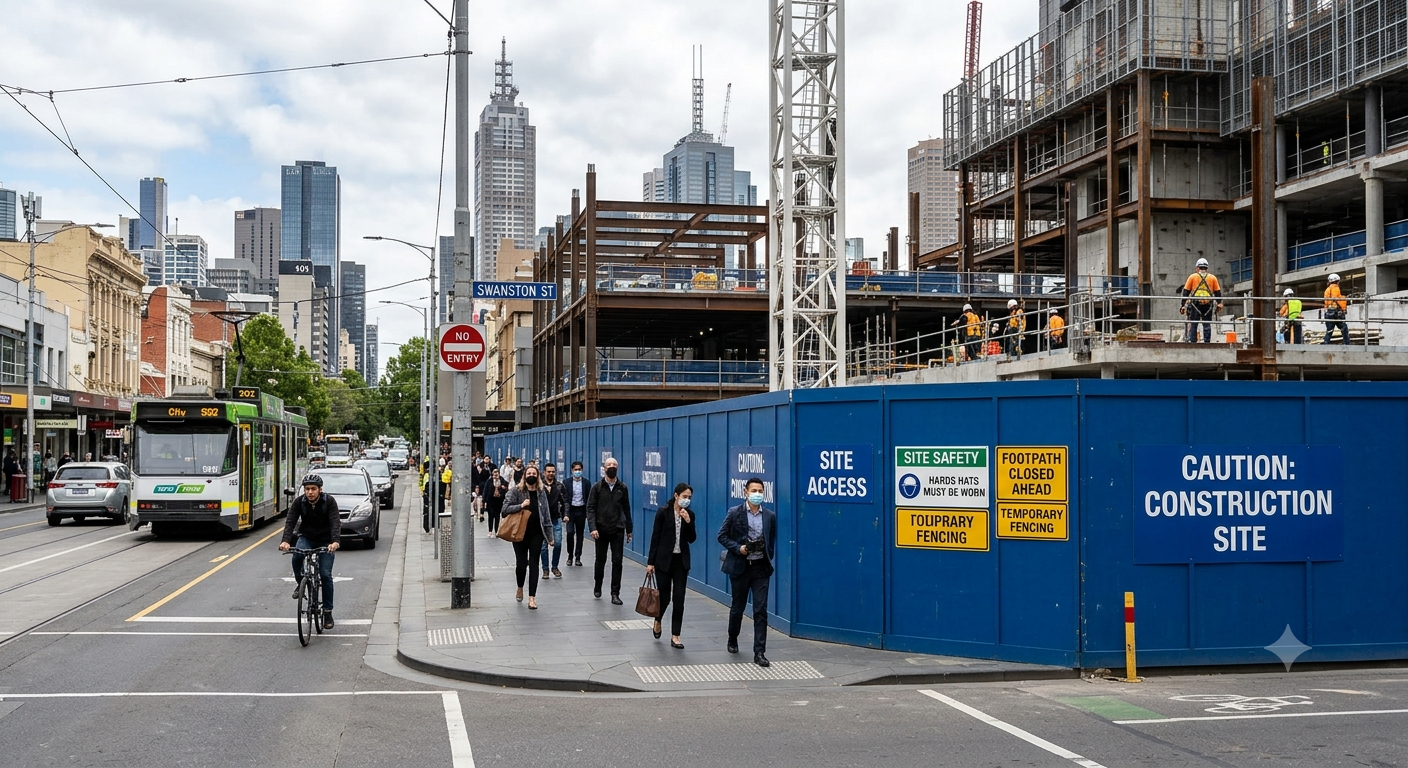
Temporary site hoarding refers to a physical barrier installed around construction areas to separate active work zones from public spaces. Unlike basic temporary fencing, properly designed hoarding provides a more substantial boundary that helps prevent unauthorised entry and limits public exposure to construction activities. These structures can be customised according to site dimensions, project requirements, surrounding conditions and relevant safety considerations. In Melbourne, where construction projects frequently take place near residential streets, shopping precincts, footpaths and busy commercial areas, establishing a secure perimeter is particularly important. Hoarding also helps contractors maintain better control over site access while creating a clearly defined working environment. When planned and installed correctly, it becomes an essential part of an overall construction site safety strategy.
Preventing Unauthorised Access to Construction Sites
Unauthorised entry is one of the major safety concerns associated with active construction projects. Construction environments contain equipment, electrical installations, temporary structures, excavation areas and materials that can create serious risks for anyone without the appropriate training or protective equipment. Children, curious pedestrians and members of the public may unknowingly enter an unsecured area, potentially exposing themselves to dangerous situations. Temporary site hoarding creates a physical separation that discourages unauthorised access and helps restrict entry to designated access points. It also makes it easier for site managers to monitor who enters and leaves the construction area. By establishing a secure perimeter, construction companies can reduce unnecessary exposure to workplace hazards and maintain greater control over site security.
Protecting Pedestrians and Nearby Road Users
Melbourne construction projects often operate in locations where pedestrians, cyclists, motorists and public transport users share limited surrounding space. Construction activities can create additional challenges when materials are delivered, machinery is moved or temporary access arrangements are required. Without suitable barriers, pedestrians may accidentally walk into hazardous areas or encounter obstructions that affect their normal routes. Properly positioned hoarding helps create a clear separation between construction operations and public movement. It can also support the management of temporary pedestrian pathways, particularly when construction work takes place close to footpaths or road boundaries. Careful consideration of barrier positioning, visibility and pedestrian access helps contractors maintain safer surroundings while allowing essential construction activities to continue.
Reducing Exposure to Falling Materials and Construction Debris
Falling materials and airborne debris are important hazards that must be considered during construction, demolition and renovation work. Activities such as cutting, drilling, dismantling structures and moving building materials can generate dust, fragments and other materials that may affect surrounding areas. Temporary site hoarding can provide a protective boundary that helps reduce public exposure to certain construction-related hazards. However, its effectiveness depends on appropriate design, structural strength, installation methods and the specific risks associated with the project. Higher-risk activities may also require additional protective measures, such as overhead protection, debris containment systems and controlled exclusion zones. Combining suitable hoarding with these safety arrangements helps create a more comprehensive approach to protecting people outside the construction site.
Supporting Workplace Health and Safety Requirements
Construction companies operating in Victoria must take workplace health and safety responsibilities seriously. Under Victorian occupational health and safety requirements, employers and those managing workplaces must identify hazards, assess associated risks and implement reasonably practicable measures to protect workers and other people who may be affected by their activities. Site hoarding can contribute to these responsibilities by helping control public access and separate potentially hazardous construction operations from surrounding environments. However, installing a barrier alone does not guarantee compliance with every applicable requirement. Contractors must also consider site-specific risk assessments, structural stability, safe access arrangements, emergency requirements and any relevant council or road authority approvals. At NGE Group, we recognise that effective site management involves considering how temporary infrastructure contributes to the wider safety requirements of each construction project.
Managing Dust, Noise and Visual Disruption
Construction activities can affect the surrounding community through dust, noise and general site disruption. These concerns are particularly noticeable when projects take place in densely populated Melbourne suburbs or busy commercial districts. Although temporary hoarding is not a complete solution for environmental management, appropriately selected and installed panels can help limit the movement of some airborne dust and reduce direct visual exposure to construction operations. Solid hoarding can also provide a degree of acoustic screening, depending on its construction, height and the surrounding conditions. This can improve the experience of pedestrians, neighbouring businesses and nearby residents while work continues. For projects with additional environmental risks, hoarding should be supported by suitable dust suppression, noise management and regular site maintenance practices.
Improving Construction Site Organisation and Access Control
An organised construction site is generally easier to manage, supervise and maintain. Temporary hoarding helps establish clear boundaries between public areas, construction zones, material storage locations and designated entry points. This separation allows site managers to plan vehicle movements, coordinate deliveries and manage pedestrian access more effectively. Clearly defined entrances can also support visitor registration, worker identification and the implementation of site-specific security procedures. For larger Melbourne developments, well-planned hoarding can help reduce confusion around site boundaries and make it easier for contractors to coordinate different construction activities. Maintaining an organised perimeter also supports routine inspections and allows site managers to identify damaged panels, unsecured openings or other potential security concerns before they become more serious problems.
Maintaining Safety During Different Construction Stages
Construction sites are constantly changing as projects move from excavation and foundation work to structural construction, installation and final finishing. Each stage introduces different hazards, which means temporary site protection must be reviewed as work progresses. For example, excavation activities may require additional perimeter controls, while structural construction can introduce risks associated with elevated work and falling materials. During equipment deliveries or major material movements, temporary access arrangements may also need to be adjusted to accommodate changing site conditions. Hoarding should therefore be treated as an active component of construction planning rather than a one-time installation. Regular inspections and timely modifications help ensure that the perimeter continues to provide appropriate protection throughout the project lifecycle.
The Importance of Choosing Suitable Hoarding Materials
The materials used for temporary site hoarding can influence its durability, stability, appearance and suitability for different construction environments. Factors such as expected installation duration, exposure to wind, ground conditions, site dimensions and surrounding pedestrian activity should be considered before selecting a system. Construction projects in Melbourne may experience changing weather conditions, making structural stability and appropriate fixing methods particularly important. Poorly installed or damaged panels can create additional hazards if they become unstable, develop sharp edges or obstruct pedestrian movement. Selecting appropriate materials and ensuring professional installation can help minimise these concerns while supporting the long-term performance of the barrier. Contractors should also arrange regular inspections and maintenance to address any damage or changes in site conditions.
Enhancing Public Confidence and Professional Site Presentation
Construction work can sometimes create inconvenience for neighbouring residents, local businesses and people visiting nearby properties. A well-maintained hoarding system helps communicate that the construction team takes public safety and site management seriously. Clean, properly aligned panels create a more organised appearance compared with exposed construction areas surrounded by inconsistent or poorly maintained barriers. Hoarding can also provide an opportunity to display project information, safety messages and relevant construction signage, provided these are positioned appropriately and meet applicable requirements. For commercial developments, professional site presentation can contribute to a more positive perception of the project while construction is underway. Maintaining an attractive and secure perimeter demonstrates attention to detail and helps build confidence among the people interacting with the surrounding environment.
Considering Melbourne's Local Construction Conditions
Every construction site has different requirements, particularly when projects take place across Melbourne's varied residential, commercial and industrial environments. A development located along a busy CBD street may require careful pedestrian management and consideration of nearby businesses, public transport infrastructure and restricted footpath space. In suburban locations, construction teams may need to consider driveway access, neighbouring properties, residential movement and local traffic conditions. Industrial developments may have different requirements relating to vehicle access, equipment movements and perimeter security. These differences make it important to assess the surrounding environment before deciding on the most suitable hoarding arrangement. Understanding local site conditions helps contractors establish practical safety boundaries that support construction activities without unnecessarily disrupting the surrounding community.
Why Professional Installation and Regular Inspections Matter
Even high-quality hoarding materials may fail to provide adequate protection if they are not installed correctly. Incorrect fixing methods, unsuitable support systems, uneven ground conditions and inadequate consideration of wind loads can compromise the stability of a temporary structure. Professional installation helps ensure that the selected system is appropriate for the site and its expected operating conditions. Once installed, the hoarding should be inspected regularly, particularly following severe weather, accidental impacts or changes to surrounding construction activities. Site managers should also check for loose panels, damaged connections, unauthorised openings and any obstructions affecting public pathways. A proactive inspection and maintenance approach helps identify potential problems early and ensures that temporary site protection remains effective throughout the construction period.
Making Temporary Site Hoarding Part of a Wider Safety Strategy
Although hoarding is an important safety measure, it should never be considered a replacement for comprehensive construction site risk management. Effective safety planning requires several measures working together, including appropriate signage, controlled entry points, traffic management, pedestrian diversions, emergency access arrangements and suitable protective equipment. Construction managers should also communicate relevant site restrictions to workers, subcontractors, suppliers and visitors. When additional hazards are identified, further controls may be necessary to protect people both inside and outside the construction boundary. Integrating temporary hoarding into the broader site safety plan helps create a more coordinated approach to managing construction risks. This ensures that public protection, worker safety and operational efficiency are considered together rather than treated as separate responsibilities.
Choosing the Right Temporary Site Hoarding Solution
Selecting an appropriate hoarding system begins with understanding the specific needs of the construction project. The site location, project duration, required barrier height, ground conditions, surrounding pedestrian activity and anticipated construction risks all influence the most suitable arrangement. Contractors should also consider installation access, maintenance requirements, visual presentation and any relevant local approval conditions. A solution that works well for a small residential renovation may not be suitable for a large commercial development in a high-traffic area. Taking time to assess these factors helps prevent avoidable installation issues and supports better site management. Working with an experienced provider can make the planning process more straightforward and help ensure that the selected hoarding system meets the practical demands of the project.
Temporary site hoarding is an essential consideration for managing safety around Melbourne construction projects. By creating a secure boundary, controlling public access and separating construction operations from surrounding areas, it helps reduce exposure to many common construction-related hazards. It also supports better pedestrian management, site organisation, environmental control and professional project presentation. However, its effectiveness depends on selecting an appropriate system, ensuring correct installation and maintaining the structure throughout the construction process. Construction companies should view hoarding as an important part of their overall safety planning rather than simply a temporary boundary around their work area. At NGE Group, we believe that well-planned site protection contributes to safer construction environments and better experiences for workers, contractors and the wider community.
Get in Touch for Your Construction Site Hoarding Requirements
Planning a construction, renovation or infrastructure project in Melbourne? Choosing the right temporary site hoarding solution can make a meaningful difference to how safely and efficiently your site operates. Our team can help you explore suitable site protection options based on your project requirements, site conditions and operational needs. Whether you are preparing a new development or looking to improve safety around an active construction area, taking the right approach to temporary hoarding is an important step. Contact NGE Group today to discuss your project and find a suitable solution for managing safety, security and site presentation throughout your construction work.
