
How Soil Processing Melbourne Contractors Separate Valuable Material From Construction Spoil
Understanding Construction Spoil and Its Hidden Value
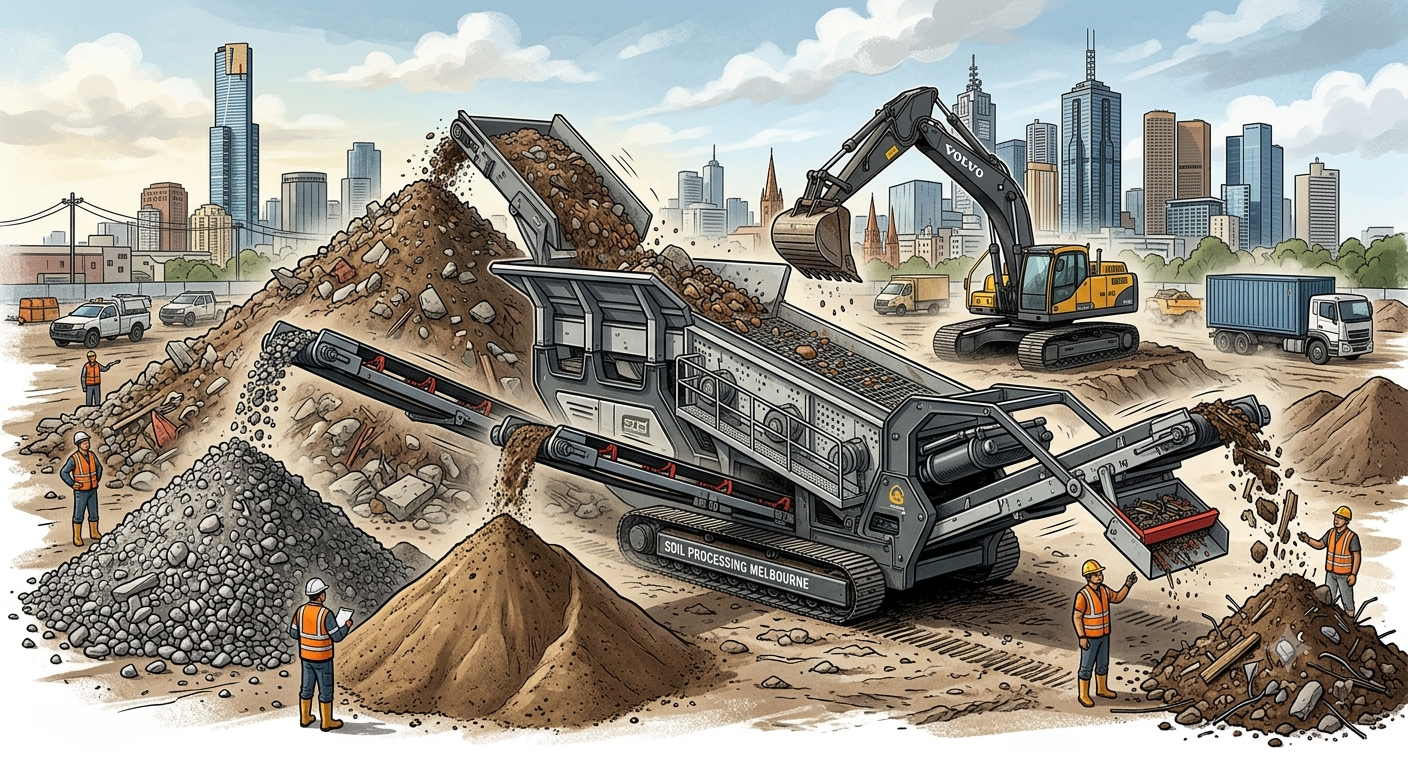
Construction projects across Melbourne can generate substantial quantities of excavated soil, clay, sand, gravel and other materials. What may initially appear to be unwanted spoil can contain useful materials that remain suitable for recovery and further processing. Soil processing provides a structured approach to separating these materials according to their physical characteristics and potential applications. The process can reduce the amount of material requiring disposal while increasing the amount that can be recovered and reused. We work with the understanding that efficient material handling begins with identifying what is actually present within each load of construction spoil. Our approach focuses on practical processing methods that help Melbourne projects manage excavated materials more efficiently.
Why Construction Spoil Requires Careful Processing
Excavated material is rarely consistent throughout an entire construction site because ground conditions can change between different excavation areas. One load may contain relatively clean soil while another can include clay, gravel, roots, concrete fragments or other construction-related materials. Mixing these materials together can make it more difficult to identify which portions can be recovered for beneficial use. Soil processing helps create separation between different material types so that each fraction can be assessed more effectively. This can also improve handling efficiency because processed materials are more consistent than unsorted spoil. For Melbourne contractors, understanding the composition of construction spoil is therefore an important part of responsible material management.
Initial Inspection of Excavated Material
The soil processing process generally begins with an assessment of the incoming material before it enters the main processing stages. Operators can examine the material for visible contamination, oversized objects, organic matter and differences in soil composition. This initial inspection helps determine which processing techniques are appropriate for the particular material being handled. Material characteristics such as moisture content, particle size and the presence of unwanted debris can influence how effectively separation can be achieved. We consider these characteristics when determining how construction spoil should move through the processing operation. Careful assessment at the beginning can help prevent unsuitable materials from being mixed with recoverable fractions.
Screening Construction Spoil by Particle Size
Screening is one of the key methods used to separate construction spoil into different particle size ranges. Processing equipment uses screening surfaces with specific openings that allow smaller particles to pass through while retaining larger pieces of material. This can separate fine soil from gravel, stones and oversized construction debris within the incoming spoil. Different screening configurations can be selected depending on the material characteristics and the intended output. Once separated, each material fraction can be assessed for its suitability for reuse or further processing. Effective screening allows us to turn a mixed stream of excavated material into more manageable and consistent material categories.
Separating Soil From Larger Materials
Construction spoil can contain larger rocks, concrete pieces, bricks, roots and other objects that need to be separated from finer soil. These larger materials can interfere with subsequent processing if they remain mixed with the soil fraction. Screening and mechanical separation can remove oversized materials while allowing smaller particles to continue through the processing system. Depending on the material composition, the separated larger fraction may itself contain materials that can be recovered or directed towards an appropriate recycling pathway. The remaining soil can then undergo further processing to improve consistency and remove additional unwanted material. This staged separation helps make better use of materials that might otherwise have been treated as general construction waste.
Managing Clay and Moist Soil
Moisture and clay content can present particular challenges during soil processing because wet material can stick together and behave differently from dry granular material. Clay can form compacted masses that make straightforward screening less effective when the material is heavily saturated. Processing methods therefore need to account for the physical characteristics of the incoming spoil and the conditions under which it is being handled. Appropriate equipment settings and processing techniques can help improve the separation of finer particles from larger material. We pay attention to these characteristics because consistent processing depends on understanding how the material behaves rather than simply treating every load in the same way. Proper management of moisture and clay can help improve the quality and consistency of recovered soil fractions.
Recovering Sand, Gravel and Useful Aggregates
Construction spoil can contain valuable granular materials such as sand, gravel and small aggregate particles that may have potential for recovery. Separating these materials from unsuitable soil and debris can create distinct fractions that are easier to assess and manage. The recovered material can then be evaluated according to its physical characteristics and the requirements of its intended application. Depending on its quality and specifications, processed material may be suitable for certain construction, landscaping or site preparation purposes. We focus on achieving useful separation rather than simply reducing the volume of spoil requiring disposal. This approach supports more efficient resource use while helping projects handle excavated materials in a structured manner.
Dealing With Organic Matter and Debris
Construction spoil can sometimes contain organic materials such as roots, vegetation and other biodegradable matter, particularly where excavation occurs around previously undeveloped areas. Organic material can affect the quality and consistency of recovered soil if it is not separated during processing. Mechanical screening can help remove larger organic pieces and other unwanted debris from the soil stream. Additional sorting may be required where the incoming material contains a mixture of construction waste and natural ground material. Keeping these unwanted components separate can help improve the consistency of the recovered fraction. For our Melbourne operations, material segregation is an important consideration when determining whether processed soil can be directed towards beneficial reuse.
The Role of Material Testing
Visual inspection and mechanical separation provide important information, but testing can also help determine whether a processed material is suitable for a particular application. Testing requirements can vary depending on the material, its source and the intended use of the recovered product. Factors such as particle size distribution, moisture content and the presence of unwanted substances can influence how processed material is classified. Where required, appropriate testing can provide additional information about the characteristics of the recovered soil or aggregate. We recognise that processing and material assessment work together when determining the most appropriate destination for recovered material. This helps ensure that decisions about reuse are based on the characteristics of the material rather than assumptions about its origin.
Reducing Unnecessary Material Disposal
Sending all excavated material directly to disposal can overlook opportunities to recover useful resources from construction spoil. Processing creates an opportunity to separate materials that may have further value from fractions that genuinely require disposal or specialised handling. This can reduce the quantity of material requiring transport and disposal while increasing the amount that can potentially be reused. Fewer unnecessary disposal movements can also contribute to more efficient project logistics when suitable recovery options are available. Our focus is on helping construction projects identify practical opportunities for material recovery through structured processing and separation. The result can be a more considered approach to managing excavated materials from the beginning of a project through to their final destination.
Supporting Melbourne Construction Projects
Melbourne construction sites can encounter varied soil conditions because excavation projects take place across established urban areas, developing suburbs and industrial locations. Contractors may therefore need to manage different combinations of soil, rock, clay, aggregate and construction debris depending on the project location. A flexible soil processing approach can help accommodate these differences while maintaining a consistent focus on material recovery. Local processing can also help construction teams make more informed decisions about the movement and destination of excavated material. We provide processing solutions with the practical requirements of Melbourne construction and civil projects in mind. NGE Group supports this process by helping clients manage construction spoil through appropriate handling, separation and recovery practices.
Creating More Consistent Recovered Materials
One of the major benefits of processing is the ability to create material streams that are more consistent than the original mixed construction spoil. Separating materials according to size and composition makes it easier to identify the characteristics of each recovered fraction. Consistency is particularly important when recovered materials are being considered for use in another construction or landscaping application. A well-processed material stream can also simplify storage, transport and subsequent handling. We aim to create practical separation outcomes that make recovered materials easier to manage and assess. This can help turn an unpredictable mixture of excavation spoil into clearly defined material categories.
Why Professional Soil Processing Matters
Effective soil processing involves more than simply putting excavated material through screening equipment because material composition, moisture, contamination and intended reuse all need to be considered. Selecting suitable processing methods can influence the quality and quantity of material recovered from each load. Poor separation can leave useful materials mixed with unsuitable fractions and reduce the potential value of the recovered material. Professional processing provides a more systematic approach to inspection, separation, handling and material management. Our experience with construction material processing allows us to focus on the practical factors that affect outcomes on Melbourne projects. By treating construction spoil as a potential resource rather than automatically as waste, contractors can make more informed decisions about material recovery.
A More Efficient Approach to Construction Spoil
Soil processing provides Melbourne contractors with a practical method for identifying and separating valuable materials from mixed construction spoil. Screening, sorting, inspection and appropriate material assessment can help distinguish soil, sand, gravel, aggregate and unwanted debris. The recovered fractions can then be managed according to their characteristics and potential applications. This approach can reduce unnecessary disposal while supporting greater recovery of materials generated during excavation and construction. We believe effective material processing should focus on both operational efficiency and responsible resource management. For projects across Melbourne, NGE Group can help create a structured pathway for processing construction spoil and identifying opportunities to recover useful material.
