
How Soil Reclaiming Can Turn Melbourne’s Excavation Spoil Into a Reusable Resource
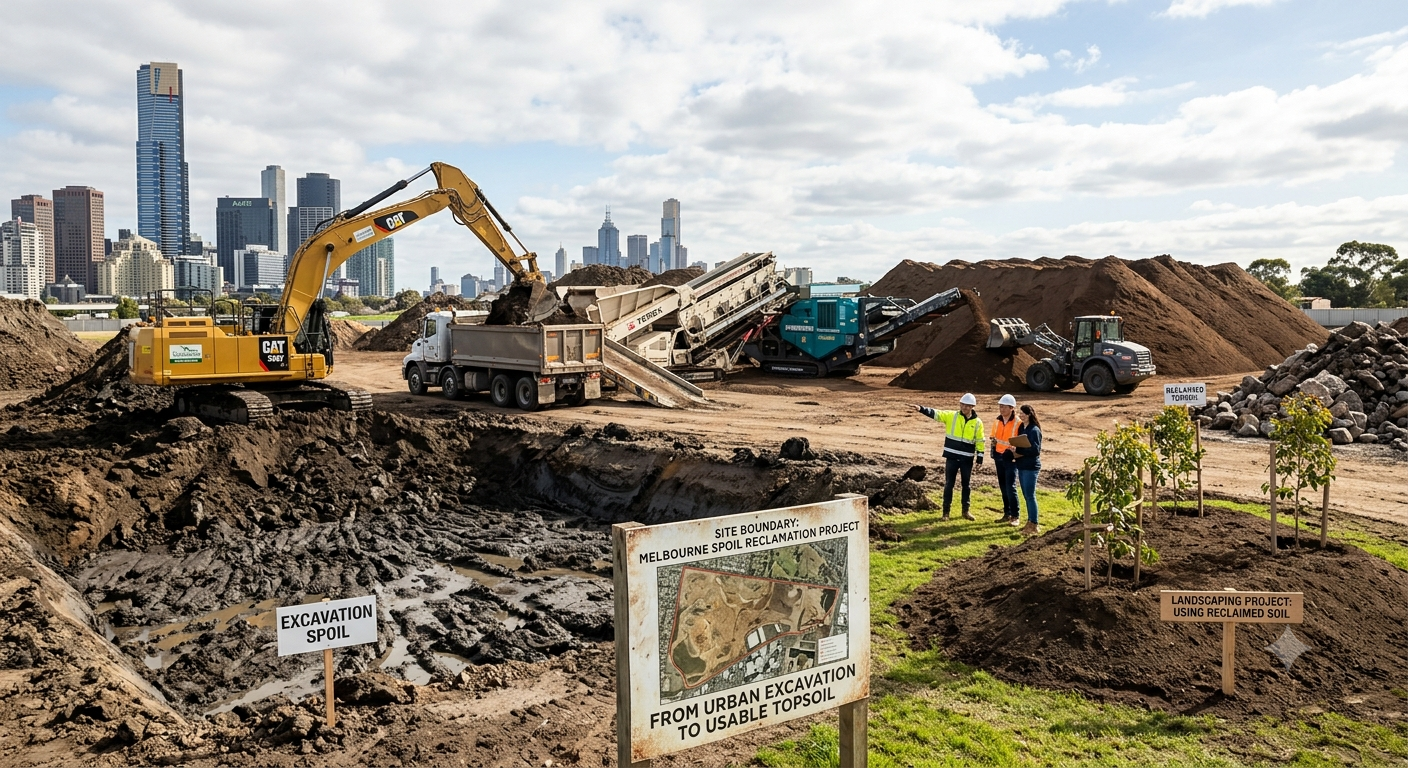
Understanding Melbourne’s Excavation Spoil Challenge
Melbourne’s continued growth has created a steady demand for excavation across residential, commercial, civil and infrastructure projects. Every trench, basement, foundation and civil construction project can generate significant quantities of excavated soil and other spoil materials. Traditionally, much of this material may be transported away from construction sites for disposal or processing elsewhere. This approach can increase project costs while also placing additional pressure on landfill capacity and transport networks. Soil reclaiming provides an alternative by treating suitable excavation spoil as a potential resource rather than automatically considering it waste. At NGE Group, we see soil recovery as an important part of building more efficient and responsible excavation practices across Melbourne.
What Is Soil Reclaiming?
Soil reclaiming involves recovering useful material from excavated spoil so that it can potentially be processed and reused for suitable applications. The process can include screening, separation, contamination assessment, processing and quality testing depending on the characteristics of the material. Excavated soil may contain a mixture of clay, sand, gravel, rocks and other materials that need to be separated before reuse. Proper processing helps identify which portions of the spoil can be recovered and which materials require alternative treatment or disposal. The objective is to maximise the useful portion of excavated material while maintaining appropriate quality and environmental controls. This approach can transform an excavation waste stream into a source of materials with practical value.
Why Excavation Spoil Should Not Always Be Treated as Waste
Excavation spoil is not automatically useless simply because it has been removed from the ground during construction. In many situations, the material contains components that may be suitable for reuse after appropriate assessment and processing. Treating every load as waste can result in valuable natural resources leaving a project site unnecessarily. It can also create additional requirements for haulage, disposal, replacement materials and associated handling. Soil reclaiming encourages project teams to consider the material characteristics before deciding how the spoil should be managed. This resource recovery mindset can support more efficient construction practices while reducing unnecessary movement of potentially reusable materials.
The Role of Soil Screening and Separation
Screening is an important stage when recovering usable material from excavation spoil. It allows different particle sizes and materials to be separated so that unsuitable components can be removed from potentially reusable fractions. Larger rocks, construction debris and other unwanted materials can often be separated from finer soil materials through appropriate processing equipment. The resulting material can then be assessed according to its intended application and relevant project requirements. Effective separation can improve consistency and make reclaimed soil easier to manage within a broader construction material strategy. For Melbourne projects, carefully planned screening can therefore play an important role in converting mixed excavation spoil into more useful material streams.
Assessing Soil Quality Before Reuse
Soil reclamation must always begin with a proper understanding of what the excavated material contains. The history and location of a site can influence the characteristics of the soil, particularly where previous industrial, commercial or intensive development has occurred. Appropriate testing and assessment can help determine whether recovered material is suitable for its intended purpose. Factors such as soil composition, moisture, particle size and the presence of unwanted substances may influence how material can be managed. Reclaimed soil should only be used where it meets the relevant requirements for the proposed application and project conditions. Taking this assessment seriously helps ensure that resource recovery supports both responsible construction and sound environmental management.
Reclaimed Soil for Construction Applications
Once suitable material has been processed and assessed, reclaimed soil may have several potential construction applications. Depending on its characteristics, it may be considered for uses such as filling, landscaping, site rehabilitation or other suitable earthworks activities. The exact application depends on material quality, engineering requirements, environmental considerations and applicable Victorian requirements. Reusing suitable material can reduce the need to bring additional virgin materials onto a project site. This can create opportunities to shorten material supply chains while making productive use of resources already generated through excavation. Soil reclaiming therefore has the potential to connect excavation activities with later stages of construction in a more circular way.
Reducing Unnecessary Truck Movements
The management of excavation spoil can involve a considerable amount of transportation, particularly on large Melbourne construction projects. Trucks may be required to remove spoil from an excavation site while other vehicles bring replacement fill or other materials back to the project. Where suitable material can be recovered and reused, some of these movements may potentially be reduced. Fewer unnecessary transport movements can contribute to more efficient site logistics and may help reduce associated fuel use and vehicle activity. This can be particularly relevant for busy Melbourne sites where traffic management, access restrictions and transport coordination are already significant considerations. Reclaiming suitable soil can therefore form part of a broader strategy for improving the efficiency of material movement around construction projects.
Supporting a More Circular Construction Approach
The construction industry is increasingly looking at ways to keep materials in productive use for longer. Soil reclaiming fits naturally within this circular approach because it focuses on recovering value from materials generated during construction rather than immediately sending them away for disposal. Instead of following a simple excavate, transport and dispose model, projects can consider whether materials can be assessed, processed and redirected towards useful applications. This can help reduce reliance on newly sourced materials where reclaimed alternatives are appropriate. It also encourages project teams to think about waste management earlier in the planning process. For our Melbourne operations, resource recovery represents an opportunity to combine practical excavation requirements with more responsible material management.
Benefits for Melbourne Construction Projects
Every construction project has its own site conditions, programme requirements and material management challenges. Soil reclaiming can provide potential benefits by helping project teams understand the value contained within their excavation spoil before making disposal decisions. Recovering suitable material can potentially reduce disposal volumes and lower the requirement for replacement materials on compatible projects. It can also help improve planning by giving contractors greater visibility over the quantities and characteristics of materials generated during excavation. These benefits are particularly relevant in Melbourne, where construction activity occurs across established urban areas as well as expanding development corridors. A carefully managed reclamation strategy can therefore become an important component of efficient project delivery.
Managing Spoil Responsibly in Urban Melbourne
Urban excavation presents challenges that go beyond simply removing soil from a site. Contractors often need to consider restricted access, nearby properties, traffic conditions, noise, dust, truck movements and the limited space available for temporary material storage. These conditions make efficient spoil management especially important for projects operating within established Melbourne suburbs and commercial areas. Soil reclaiming can provide another option for managing suitable material by encouraging recovery and planned reuse wherever practical. Good coordination between excavation, testing, processing, transport and construction teams can make the process more efficient. Our approach is focused on understanding these practical conditions and developing material management practices that suit the needs of each project.
Planning Soil Reclamation From the Start
Successful soil reclamation is easier when material recovery is considered before excavation begins. Early planning allows project teams to estimate expected spoil quantities, understand likely soil conditions and identify potential reuse pathways. It also creates an opportunity to coordinate testing, processing, storage and transport requirements before large volumes of material begin leaving the site. Waiting until excavation spoil has already accumulated can make recovery more difficult, particularly where the site has limited space or strict programme deadlines. Including reclamation within the project plan can help contractors make more informed decisions about which materials should be retained, processed, transported or disposed of. This forward planning can turn soil recovery from an afterthought into an integrated part of construction resource management.
Choosing the Right Approach for Each Site
Not every type of excavation spoil will be suitable for reclamation, and the correct management approach depends on the individual material and project circumstances. Soil characteristics, contamination risks, intended reuse, testing requirements, logistics and regulatory obligations all need to be considered before material is redirected. A professional assessment helps prevent unsuitable material from being used in applications where it may not meet the required standards. It also allows potentially valuable material to be identified rather than being discarded simply because its characteristics have not been properly investigated. This balanced approach ensures that resource recovery is based on evidence rather than assumptions. At NGE Group, we recognise that effective spoil management requires a practical understanding of both excavation operations and material recovery.
Building a More Resource Efficient Future
Melbourne’s construction industry will continue to generate excavation material as new buildings, infrastructure and developments are delivered across the city. The long term challenge is finding practical ways to manage these materials without treating every excavated load as a disposal problem. Soil reclaiming provides one pathway by identifying suitable materials, processing them appropriately and returning them to productive use where possible. It can support better resource efficiency while potentially reducing disposal requirements, material replacement and unnecessary transport. The success of this approach depends on responsible assessment, appropriate processing, careful logistics and compliance with applicable requirements. By treating suitable excavation spoil as a potential resource, NGE Group is helping demonstrate how Melbourne’s construction sector can move towards smarter and more sustainable material management.
Excavation spoil is an unavoidable part of many Melbourne construction and infrastructure projects, but its removal does not always have to mark the end of its useful life. Soil reclaiming creates an opportunity to assess, recover and reuse suitable materials that might otherwise be treated as waste. Through screening, testing, processing and appropriate end use, recovered soil can become a valuable component of future construction activities. This can support more efficient material management while potentially reducing disposal volumes and unnecessary transportation. The key is to approach reclamation as a planned process that considers environmental, technical, logistical and project requirements from the beginning. As Melbourne continues to develop, responsible soil recovery can play an increasingly important role in creating a more resource efficient construction industry.
